


Used Toyota Land Cruiser 70 for Sale — 52 listed
Set your destination to see the total price including shipping (C&F).
52 Results

Ref# UW-6a98d8c04f072
TOMISHO CO.,LTD
2024 Toyota Land Cruiser 70 3DA-GDJ76W
AX diesel turbo
- Mileage
- 11,693 km
- Year
- 2024/6
- Engine
- 2,750cc
- Trans.
- Automatic
FOBPrice$41,671.06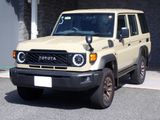
Ref# UW-mvhnjypjybef
TOMISHO CO.,LTD
2024 Toyota Land Cruiser 70 3DA-GDJ76W
AX Diesel turbo
- Mileage
- 5,716 km
- Year
- 2024/5
- Engine
- 2,750cc
- Trans.
- Automatic
FOBPrice$42,833.98
Ref# UW-mva7e4ff7wy7
MaccaLi inc
2015 Toyota Land Cruiser 70 CBF-GRJ76K
Van
- Mileage
- 54,250 km
- Year
- 2015/9
- Engine
- 3,955cc
- Trans.
- Manual
FOBPrice$32,001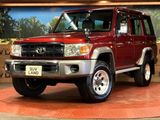
Ref# UW-mw718exo7sm8
MaccaLi inc
2015 Toyota Land Cruiser 70 CBF-GRJ76K
Van
- Mileage
- 50,100 km
- Year
- 2015/2
- Engine
- 3,955cc
- Trans.
- Manual
FOBPrice$33,301
Ref# UW-muyqg3bsa8eh
MaccaLi inc
2024 Toyota Land Cruiser 70 3DA-GDJ76W
AX
- Mileage
- 4,914 km
- Year
- 2024/8
- Engine
- 2,754cc
- Trans.
- Automatic
FOBPrice$43,545
Ref# UW-mwe6j8z8hc01
INSPIRE LLC
2024 Toyota Land Cruiser 70 3DA-GDJ76W
AX
- Mileage
- 35,010 km
- Year
- 2024/5
- Engine
- 2,754cc
- Trans.
- Automatic
FOBPrice$43,681
Ref# UW-6a72a8f65b6ca
MaccaLi inc
2025 Toyota Land Cruiser 70 3DA-GDJ76W
AX
- Mileage
- 9,454 km
- Year
- 2025/9
- Engine
- 2,754cc
- Trans.
- Automatic
FOBPrice$43,818
Ref# UW-6a61ac7160c4f
MaccaLi inc
2024 Toyota Land Cruiser 70 3DA-GDJ76W
AX
- Mileage
- 15,101 km
- Year
- 2024/1
- Engine
- 2,754cc
- Trans.
- Automatic
FOBPrice$44,226
Ref# UW-mvegv53s66pe
MaccaLi inc
2025 Toyota Land Cruiser 70 3DA-GDJ76W
AX
- Mileage
- 12,390 km
- Year
- 2025/2
- Engine
- 2,754cc
- Trans.
- Automatic
FOBPrice$44,430
Ref# UW-6a9e2a74efd6e
MaccaLi inc
2025 Toyota Land Cruiser 70 3DA-GDJ76W
AX
- Mileage
- 1,588 km
- Year
- 2025/2
- Engine
- 2,754cc
- Trans.
- Automatic
FOBPrice$44,499
Ref# UW-6a8d06f00fe58
MaccaLi inc
2025 Toyota Land Cruiser 70 3DA-GDJ76W
AX
- Mileage
- 3,062 km
- Year
- 2025/8
- Engine
- 2,754cc
- Trans.
- Automatic
FOBPrice$44,567
Ref# UW-69f6bbf2e0e8d
INSPIRE LLC
2025 Toyota Land Cruiser 70 3DA-GDJ76W
AX
- Mileage
- 7,380 km
- Year
- 2025/2
- Engine
- 2,754cc
- Trans.
- Automatic
FOBPrice$44,567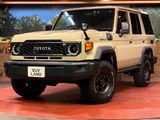
Ref# UW-mwigaxtm4npw
MaccaLi inc
2024 Toyota Land Cruiser 70 3DA-GDJ76W
AX
- Mileage
- 26,280 km
- Year
- 2024/9
- Engine
- 2,754cc
- Trans.
- Automatic
FOBPrice$44,907
Ref# UW-mvsqrszmh8ch
MaccaLi inc
2025 Toyota Land Cruiser 70 3DA-GDJ76W
AX
- Mileage
- 24,100 km
- Year
- 2025/7
- Engine
- 2,754cc
- Trans.
- Automatic
FOBPrice$45,111
Ref# UW-6ab493e26c7ee
MaccaLi inc
2025 Toyota Land Cruiser 70 3DA-GDJ76W
AX
- Mileage
- 1,200 km
- Year
- 2025/5
- Engine
- 2,754cc
- Trans.
- Automatic
FOBPrice$45,248
Ref# UW-mvogaqft085a
MaccaLi inc
2024 Toyota Land Cruiser 70 3DA-GDJ76W
AX
- Mileage
- 3,450 km
- Year
- 2024/2
- Engine
- 2,754cc
- Trans.
- Automatic
FOBPrice$45,384
Ref# UW-mvd1mkdfouaa
INSPIRE LLC
2024 Toyota Land Cruiser 70 3DA-GDJ76W
AX
- Mileage
- 7,500 km
- Year
- 2024/5
- Engine
- 2,754cc
- Trans.
- Automatic
FOBPrice$45,452
Ref# UW-mvhcjq9v5p4p
MaccaLi inc
2026 Toyota Land Cruiser 70 3DA-GDJ76W
AX
- Mileage
- 4,010 km
- Year
- 2026/1
- Engine
- 2,754cc
- Trans.
- Automatic
FOBPrice$45,588
Ref# UW-mv7c3beyyw4i
MaccaLi inc
2024 Toyota Land Cruiser 70 3DA-GDJ76W
AX
- Mileage
- 7,340 km
- Year
- 2024/8
- Engine
- 2,754cc
- Trans.
- Automatic
FOBPrice$45,588
Ref# UW-muvw313127k6
MaccaLi inc
2025 Toyota Land Cruiser 70 3DA-GDJ76W
AX
- Mileage
- 6,500 km
- Year
- 2025/8
- Engine
- 2,754cc
- Trans.
- Automatic
FOBPrice$45,588
Ref# UW-mvhcjpc5o6p2
MaccaLi inc
2025 Toyota Land Cruiser 70 3DA-GDJ76W
AX
- Mileage
- 6,410 km
- Year
- 2025/5
- Engine
- 2,754cc
- Trans.
- Automatic
FOBPrice$45,792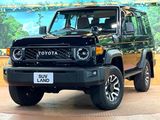
Ref# UW-mwfm4ebsk9kx
MaccaLi inc
2025 Toyota Land Cruiser 70 3DA-GDJ76W
AX
- Mileage
- 16,870 km
- Year
- 2025/5
- Engine
- 2,754cc
- Trans.
- Automatic
FOBPrice$45,928
Ref# UW-6aa4c21e9cf69
MaccaLi inc
2025 Toyota Land Cruiser 70 3DA-GDJ76W
AX
- Mileage
- 3,480 km
- Year
- 2025/7
- Engine
- 2,754cc
- Trans.
- Automatic
FOBPrice$45,928
Ref# UW-69f56a8d7c231
MaccaLi inc
2025 Toyota Land Cruiser 70 3DA-GDJ76W
AX
- Mileage
- 3,420 km
- Year
- 2025/9
- Engine
- 2,754cc
- Trans.
- Automatic
FOBPrice$46,609
Ref# UW-mw46uptbzrpl
INSPIRE LLC
2025 Toyota Land Cruiser 70 3DA-GDJ76W
AX
- Mileage
- 7,660 km
- Year
- 2025/10
- Engine
- 2,754cc
- Trans.
- Automatic
FOBPrice$46,814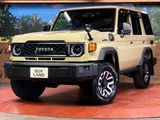
Ref# UW-mvu6qcx7ubho
MaccaLi inc
2025 Toyota Land Cruiser 70 3DA-GDJ76W
AX
- Mileage
- 3,307 km
- Year
- 2025/10
- Engine
- 2,754cc
- Trans.
- Automatic
FOBPrice$46,814
Ref# UW-mvd1mkuyf079
INSPIRE LLC
2024 Toyota Land Cruiser 70 3DA-GDJ76W
AX
- Mileage
- 15,910 km
- Year
- 2024/12
- Engine
- 2,754cc
- Trans.
- Automatic
FOBPrice$46,950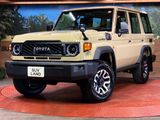
Ref# UW-6ab09f7b6e5d9
MaccaLi inc
2025 Toyota Land Cruiser 70 3DA-GDJ76W
AX
- Mileage
- 842 km
- Year
- 2025/4
- Engine
- 2,754cc
- Trans.
- Automatic
FOBPrice$46,950
Ref# UW-mw717gfd3g0b
INSPIRE LLC
2024 Toyota Land Cruiser 70 3DA-GDJ76W
AX
- Mileage
- 19,090 km
- Year
- 2024/5
- Engine
- 2,754cc
- Trans.
- Automatic
FOBPrice$47,222
Ref# UW-mvd1mlmawgkg
INSPIRE LLC
2025 Toyota Land Cruiser 70 3DA-GDJ76W
AX
- Mileage
- 320 km
- Year
- 2025/10
- Engine
- 2,754cc
- Trans.
- Automatic
FOBPrice$47,358
Ref# UW-mvsqrsb2ktu0
MaccaLi inc
2024 Toyota Land Cruiser 70 3DA-GDJ76W
AX
- Mileage
- 8,870 km
- Year
- 2024/4
- Engine
- 2,754cc
- Trans.
- Automatic
FOBPrice$47,835
Ref# UW-mv316etmh8sl
INSPIRE LLC
2026 Toyota Land Cruiser 70 3DA-GDJ76W
AX
- Mileage
- 5,780 km
- Year
- 2026/3
- Engine
- 2,754cc
- Trans.
- Automatic
FOBPrice$47,971
Ref# UW-mv7c3c2cccog
MaccaLi inc
2025 Toyota Land Cruiser 70 3DA-GDJ76W
AX
- Mileage
- 1,963 km
- Year
- 2025/8
- Engine
- 2,754cc
- Trans.
- Automatic
FOBPrice$48,312
Ref# UW-mut12wmzt0pf
MaccaLi inc
2026 Toyota Land Cruiser 70 3DA-GDJ76W
AX
- Mileage
- 1,999 km
- Year
- 2026/1
- Engine
- 2,754cc
- Trans.
- Automatic
FOBPrice$49,333 SOLD OUT
Ref# UW-6aa370cd01d2f
INSPIRE LLC
2014 Toyota Land Cruiser 70 CBF-GRJ76K
Van
- Mileage
- 86,550 km
- Year
- 2014/12
- Engine
- 3,955cc
- Trans.
- Manual
FOBPrice$27,385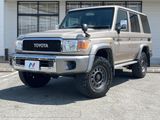 SOLD OUT
Ref# UW-6a6d633e3fbc6
INSPIRE LLC
2015 Toyota Land Cruiser 70 CBF-GRJ76K
Van
- Mileage
- 57,687 km
- Year
- 2015/4
- Engine
- 3,955cc
- Trans.
- Manual
FOBPrice$29,420 SOLD OUT
Ref# UW-6a3c9b5d9984c
INSPIRE LLC
2025 Toyota Land Cruiser 70 3DA-GDJ76W
AX
- Mileage
- 6,210 km
- Year
- 2025/4
- Engine
- 2,754cc
- Trans.
- Automatic
FOBPrice$44,249 SOLD OUT
Ref# UW-6a6d6319779d2
INSPIRE LLC
2025 Toyota Land Cruiser 70 3DA-GDJ76W
AX
- Mileage
- 5,400 km
- Year
- 2025/12
- Engine
- 2,754cc
- Trans.
- Automatic
FOBPrice$44,299 SOLD OUT
Ref# UW-6a7d349caa122
INSPIRE LLC
2025 Toyota Land Cruiser 70 3DA-GDJ76W
AX
- Mileage
- 9,185 km
- Year
- 2025/8
- Engine
- 2,754cc
- Trans.
- Automatic
FOBPrice$44,650 SOLD OUT
Ref# UW-mw2r0xfug4sb
MaccaLi inc
2024 Toyota Land Cruiser 70 3DA-GDJ76W
AX
- Mileage
- 16,840 km
- Year
- 2024/7
- Engine
- 2,754cc
- Trans.
- Automatic
FOBPrice$44,771 SOLD OUT
Ref# UW-6aaa083ca2393
INSPIRE LLC
2025 Toyota Land Cruiser 70 3DA-GDJ76W
AX
- Mileage
- 15,300 km
- Year
- 2025/8
- Engine
- 2,754cc
- Trans.
- Automatic
FOBPrice$44,812 SOLD OUT
Ref# UW-6a77eef94d0f1
INSPIRE LLC
2025 Toyota Land Cruiser 70 3DA-GDJ76W
AX
- Mileage
- 6,803 km
- Year
- 2025/1
- Engine
- 2,754cc
- Trans.
- Automatic
FOBPrice$45,088 SOLD OUT
Ref# UW-6a0a81ecd477c
INSPIRE LLC
2025 Toyota Land Cruiser 70 3DA-GDJ76W
AX
- Mileage
- 7,360 km
- Year
- 2025/3
- Engine
- 2,754cc
- Trans.
- Automatic
FOBPrice$45,339 SOLD OUT
Ref# UW-munbrwwo2auh
INSPIRE LLC
2025 Toyota Land Cruiser 70 3DA-GDJ76W
AX
- Mileage
- 8,717 km
- Year
- 2025/2
- Engine
- 2,754cc
- Trans.
- Automatic
FOBPrice$45,584 SOLD OUT
Ref# UW-mvblxeoifbtm
MaccaLi inc
2025 Toyota Land Cruiser 70 3DA-GDJ76W
AX
- Mileage
- 16,050 km
- Year
- 2025/2
- Engine
- 2,754cc
- Trans.
- Automatic
FOBPrice$45,588 SOLD OUT
Ref# UW-6ab493e2d9a70
INSPIRE LLC
2026 Toyota Land Cruiser 70 3DA-GDJ76W
AX
- Mileage
- 1,287 km
- Year
- 2026/4
- Engine
- 2,754cc
- Trans.
- Automatic
FOBPrice$45,749 SOLD OUT
Ref# UW-mwbbototv6ir
INSPIRE LLC
2025 Toyota Land Cruiser 70 3DA-GDJ76W
AX
- Mileage
- 4,114 km
- Year
- 2025/10
- Engine
- 2,754cc
- Trans.
- Automatic
FOBPrice$45,762 SOLD OUT
Ref# UW-6a72a8f5d1c82
INSPIRE LLC
2025 Toyota Land Cruiser 70 3DA-GDJ76W
AX
- Mileage
- 9,315 km
- Year
- 2025/4
- Engine
- 2,754cc
- Trans.
- Automatic
FOBPrice$46,181 SOLD OUT
Ref# UW-mvioj77hgyhz
INSPIRE LLC
2025 Toyota Land Cruiser 70 3DA-GDJ76W
AX
- Mileage
- 17,700 km
- Year
- 2025/8
- Engine
- 2,754cc
- Trans.
- Automatic
FOBPrice$46,455 SOLD OUT
Ref# UW-mvzwfmt09ry0
INSPIRE LLC
2025 Toyota Land Cruiser 70 3DA-GDJ76W
AX
- Mileage
- 150 km
- Year
- 2025/9
- Engine
- 2,754cc
- Trans.
- Automatic
FOBPrice$46,722


Toyota Land Cruiser 70 Purchase Guide

The Toyota Land Cruiser 70 is the heavy-duty Land Cruiser model introduced in 1984, which Toyota describes as a model that has "continued to uphold trust." Following a limited-time reissue in 2014 to mark its 30th anniversary, it was reintroduced as an ongoing production model. On the used market, model years span a wide range, so your search will differ depending on whether you are looking for an original 70 Series or a 2014-or-later model. Many examples are said to have been modified for camping or off-roading, so it is worth checking whether a vehicle has been modified and, if so, what was done.
First-Generation 70 Series Toyota Land Cruiser 70 (1984–): The Generation Where the "70", Later Brought Back Twice, Began
Appeal of the First-Generation 70 Series Toyota Land Cruiser 70
The 70 That Started the Later Re-Release and Reintroduction
The first-generation 70 Series went on sale in Japan on November 2, 1984, replacing the 40 Series after 24 years. Toyota calls the Land Cruiser "70" its "heavy-duty model," and this was the generation that first gave shape to that character. At launch it came with short (2,310 mm) and middle (2,600 mm) wheelbases, and with soft-top, van and new FRP-top bodies. Every launch model used the 3B, a 3.4L inline-four diesel (98 PS, 23.0 kgf·m). A one-touch 2-4 selector switched between rear-wheel drive and 4WD. Compared with the 40, the cabin was larger, the floor lower, and curved glass was used. The frame was a welded closed-section design with a larger cross-section for strength. In the January 1990 minor change, the engines were replaced by the 1PZ 3.5L inline-five diesel (115 PS) and the 1HZ 4.2L inline-six diesel, and a 4-speed automatic became available on 4.2L models such as the 4.2 ZX. Four-door versions on a 2,730 mm wheelbase (PZJ77 and HZJ77) were also listed from 1990. In August 1999 the front suspension changed from leaf springs to coil springs while keeping the rigid axle, to improve ride comfort. Japanese sales ended in July 2004, while production continued for overseas markets. The 2014 limited-time model marked the 30th anniversary of this generation's 1984 debut, and in 2023 Toyota reintroduced the "70" to Japan as a regular model. As a used car, if you are looking for a Japanese-market 70 built before 2014, this is the only generation available.
Drawbacks of the First-Generation 70 Series Toyota Land Cruiser 70
Twenty years of engine, body and suspension changes
Japanese-market examples of this generation were built between 1984 and 2004, and the specification changed a lot over those twenty years. The 1984 launch models use the 3B 3.4L four-cylinder diesel; from 1990 the 1PZ five-cylinder and 1HZ six-cylinder diesels replaced it. Bodies came in several wheelbases (2,310 mm, 2,600 mm and 2,730 mm) and roof types, so parts must be looked up by the exact model code (for example BJ73V, PZJ77HV or HZJ76V). Automatic transmissions were limited. The 4-speed automatic was offered with the 4.2L 1HZ engine, while the 3.5L 1PZ grades listed in catalogs were 5-speed manual only. Trucks built before the August 1999 change have leaf springs at the front as well as the rear. Toyota moved the front to coil springs to improve ride comfort, so if comfort matters, look at August 1999-on models.
Rivals of the First-Generation 70 Series Toyota Land Cruiser 70
Nissan Safari (Y60)
When the original 70 series was on sale in Japan, its most direct rival was the Nissan Safari. The Y60 generation, launched in 1987, was a big solid-axle diesel 4x4 like the 70, but with more emphasis on leisure use and ride comfort. The 70 went on sale in November 1984 with a 98 ps 3.4-litre four-cylinder diesel, replaced in 1989 by 3.5-litre five-cylinder and 4.2-litre six-cylinder diesels. It has a ladder frame, part-time 4WD and leaf-sprung solid axles front and rear; the front springs only changed to coils in 1999. It was first registered only as a commercial vehicle, and Japanese sales ended in 2004 due to emission rules. The Y60 Safari is known for its 4.2-litre straight-six TD42 diesel (125 ps / 273 Nm in a 1991 Granroad). Unlike the 70, it has coil springs at both ends, with a 3-link front and 5-link rear axle, plus ventilated discs all round. A 1991 Granroad measures 4,885 x 1,930 x 1,805 mm. Choose the 70 for the simplest, toughest tool for heavy loads and rough tracks. Choose the Safari for a big six-cylinder diesel and a softer coil-sprung ride on long trips.
First-Generation 70 Series Toyota Land Cruiser 70 Specifications
3.4L, 3.5L & 4.2L diesels, 5MT / 4AT, part-time 4WD
Size: varies by body; e.g. middle-wheelbase FRP-top van 4,265 × 1,690 × 1,940 mm (wheelbase 2,600 mm), four-door van 4,805 × 1,690 × 1,925 mm (wheelbase 2,730 mm); short wheelbase 2,310 mm Model codes: BJ70 / BJ73V (3B, from 1984); PZJ70 / PZJ77 (1PZ, from 1990); HZJ73 / HZJ77 (1HZ, from 1990); HZJ76 (1HZ, from 1999) Engine: 3B 3,431 cc inline-4 OHV diesel (1984); 1PZ 3.5L inline-5 OHC diesel and 1HZ 4.2L inline-6 OHC diesel (from 1990) Max output / torque: 3B 98 PS / 23.0 kgf·m; 1PZ 115 PS / 23.5 kgf·m; 1HZ 130–135 PS depending on year (29 kgf·m in the 1999 catalog) Transmission: 5-speed manual; 4-speed automatic available with the 4.2L 1HZ (e.g. 4.2 ZX) Drive: part-time 4WD (one-touch 2-4 selector at launch) Seating capacity: 5 in the four-door van (varies by body) Main grades: STD, LX, ZX (varied by period) Main updates: 1984-11 launch (soft top, van, FRP top; short and middle wheelbase); 1990-01 minor change, 1PZ and 1HZ diesels, 4-speed automatic on 4.2L; 1999-08 front suspension changed from leaf to coil springs (rigid axle kept); 2004-07 Japanese sales ended
Limited-Time Re-Release Toyota Land Cruiser 70 (GRJ76K/GRJ79K / 2014): The 1GR-FE-Powered 70 That Briefly Returned to Japan for Its 30th Anniversary
The Appeal of the Limited-Time Re-Release Toyota Land Cruiser 70
A 70 You Could Order New for Only a Limited Time
On August 25, 2014, the 70 went on sale again in Japan as a model marking the 30th anniversary of the "70" Series. It was a limited-time model: orders closed with production through June 30, 2015, and it did not return to the permanent line-up. Special editions of the Land Cruiser and the Land Cruiser Prado were released at the same time. The engine is the 1GR-FE, a 4.0L V6 DOHC petrol unit with 231 PS and 360 N·m, mated to a 5-speed manual. Drive is part-time 4WD selected with a transfer lever, with automatic locking front hubs. Electric front and rear differential locks and a winch built into the front bumper were options. Fuel economy was 6.6 km/L in the JC08 cycle. Two bodies were offered: a four-door van (GRJ76K, 5 seats) and a double-cab pickup (GRJ79K, 5 seats) that can carry up to 600 kg of cargo. Toyota noted that the double cab was a first for Japan. Launch prices were 3.6 million yen for the van and 3.5 million yen for the pickup (tax included), and the monthly sales target was 200 units. Both were built at Toyota Auto Body's Yoshiwara Plant. The interior was kept simple on purpose: an analog meter cluster, a large four-spoke steering wheel, bucket-type front seats and a straight horizontal dashboard designed for off-road driving. The rear bench seat tumbles forward in both body styles. Some say many went to government agencies, while private owners often built them up for camping and off-roading. On the used market, a white body with black bumpers is said to be especially popular. Because it was a limited-time model, it is scarce today.
Drawbacks of the Limited-Time Re-Release Toyota Land Cruiser 70
Few on the market, 5-speed manual only, and 6.6 km/L fuel economy
Because orders were accepted only for a limited period, the number of used units is small compared with models sold continuously. Good examples tend to sell quickly, and narrowing your search by color or body can take a while. Some say units in the popular white-with-black-bumpers combination command higher prices for their year and mileage. The only transmission is a 5-speed manual; there is no automatic. The 4.0L V6 petrol engine returns 6.6 km/L in the JC08 cycle. The two bodies are quite different. The van (GRJ76K) is 4,810 mm long on a 2,730 mm wheelbase. The pickup (GRJ79K) is 5,270 mm long on a 3,180 mm wheelbase, so it needs more room to park and turn. Check the model code to make sure you are looking at the body you want. Safety equipment is basic by today's standards: Toyota's release lists dual front airbags and ABS. Many were modified for camping or off-roading. Ask whether the original parts come with the car, as they make a big difference in the cost of returning it to stock.
Rivals of the Limited-Time Re-Release Toyota Land Cruiser 70
Land Cruiser Prado
The most obvious comparison for this generation is Toyota's own Land Cruiser Prado. When the 70 re-release began in August 2014, a special edition of the Prado was launched at the same time. For anyone considering a new Land Cruiser model back then, these were two options available side by side. Owner posts show that people do actually compare the two. Some say they switched from a Prado to a 70, and among campers and off-roaders there is a pattern of choosing a 70 after gaining experience with a Prado. The 70 belongs to the line Toyota itself calls its "heavy-duty model," and it also has the scarcity of a limited-time 30th-anniversary model. For buyers who place weight on its tool-like character or its value as a commemorative model, the 70 is likely to stay on the shortlist. On the other hand, since the Prado has been sold continuously, there are more used units in circulation than the 70, and buyers tend to have a wider choice of years and specifications. For those who want to narrow down their criteria in detail or don't want to spend much time searching, the Prado can be the more practical choice. Which one suits you depends on how much off-road driving you'll do, how you'll carry your gear, and how much you'll use it for everyday driving. How you load camping equipment and whether you plan to modify the vehicle can also tip the decision. Rather than deciding from spec sheets alone, the surest approach is to compare ride comfort, cargo space usability, and equipment differences in the actual vehicles.
Specifications of the Limited-Time Re-Release Toyota Land Cruiser 70
4.0L 1GR-FE V6 petrol, 5-speed MT, part-time 4WD; van and double-cab pickup
Size: van 4,810 × 1,870 × 1,920 mm (wheelbase 2,730 mm); pickup 5,270 × 1,770 × 1,950 mm (wheelbase 3,180 mm) Model codes: CBF-GRJ76K (four-door van), CBF-GRJ79K (double-cab pickup) Engine: 1GR-FE 4.0L V6 DOHC petrol (VVT-i) Max output / torque: 231 PS (170 kW) at 5,200 rpm / 360 N·m at 3,800 rpm Transmission: 5-speed manual Drive: part-time 4WD with automatic locking hubs; electric front and rear differential locks optional Seating capacity: 5 (van and pickup) Weight: van 2,120 kg, pickup 2,220 kg; pickup payload up to 600 kg Fuel economy: 6.6 km/L (JC08) Main grades: one grade per body (van, pickup) Main updates: 2014-08 launch for the 30th anniversary; orders closed with production through 2015-06-30
Reintroduced Toyota Land Cruiser 70 (2023–): The Continuing-Production 70 Returns to Japan as a Heavy-Duty Model

Strengths of the Reintroduced Toyota Land Cruiser 70
Announced alongside the "250," it reunited all three Land Cruiser series in Japan
In August 2023, in the announcement of the world premiere of the new Land Cruiser "250," Toyota revealed that it would reintroduce the "70" to Japan as a continuing-production model. It went on sale on November 29, 2023, about eight years after the limited-time 2014 model ended production in June 2015. With this reintroduction, all three Land Cruiser series became available in Japan once again. Toyota positions the "70" as its "heavy-duty model," the one that takes on demanding use. The 70 Series was born in 1984 and was sold again in Japan for a limited time in 2014 for its 30th anniversary. This time it is a regular production model, so it can be ordered from the normal line-up. The biggest change from the 2014 model is the powertrain. The 4.0L V6 petrol engine and 5-speed manual were replaced by the 1GD-FTV, a 2.8L inline-four direct-injection turbo diesel with 204 PS and 500 N·m, paired with a 6-speed torque-converter automatic (6 Super ECT). Fuel economy is 10.1 km/L in the WLTC cycle. Drive is still part-time 4WD with a 2-speed transfer case, and electronic differential locks are fitted. The ladder frame and rigid axles (coil springs at the front, leaf springs at the rear) are carried over, while the suspension was revised for better ride comfort. Electronic aids include VSC stability control, Active Traction Control (A-TRC), Hill-start Assist Control and Downhill Assist Control. Toyota Safety Sense with Pre-Collision Safety, automatic headlights and a back monitor are also fitted. In Japan it is sold as a single grade, AX: a five-seat four-door wagon (model code 3DA-GDJ76W) priced at 4.8 million yen including tax at launch. The exterior keeps the 70's square silhouette with updated details. It is built at Toyota Auto Body's Yoshiwara Plant, with a planned volume of 400 units a month for Japan.
Weaknesses of the Reintroduced Toyota Land Cruiser 70
One grade, a work-truck size and ride, tight supply, and confusion with the 2014 model
The 2014 limited-time model is sold under the same "70" name, and some used listings show both side by side. The 2014 model (GRJ76K van and GRJ79K pickup) has a 4.0L V6 petrol engine (1GR-FE) and a 5-speed manual, while the reintroduced model (GDJ76W) has a 2.8L diesel and a 6-speed automatic. Use the model code to tell them apart and when ordering parts. Choice is narrow. The Japanese line-up has one grade (AX), one body (the five-seat four-door wagon) and one powertrain, with no manual transmission and no petrol engine. Toyota calls it a heavy-duty model, and the numbers show it: 2,300 kg curb weight, a leaf-spring rear axle, 1,920 mm overall height and a 6.3 m minimum turning radius. If you will use it mainly as a daily car in town, confirm on a test drive that the ride and maneuverability suit you. Supply has been tight. In early 2024, production of the GD-series diesel engine stopped after Toyota Industries' engine certification irregularities came to light. The 70 itself was not one of the affected models, but Japanese dealers suspended new orders and delivery times became uncertain. In November 2024, Toyota reported a voluntary improvement to MLIT for the genuine add-on auto alarm sold for the 3DA-GDJ76W (parts shipped from December 2023 to September 2024, 1,048 units). Because of a wiring issue, the alarm could go off with the engine running. If a car has this dealer-fit alarm, check that the wiring has been replaced. Many owners modify their 70s for camping and off-road use. If the ride height, tires or lights have been changed, ask whether the original parts come with the car.
Rivals of the Reintroduced Toyota Land Cruiser 70
Jeep Wrangler (JL)
Among body-on-frame off-roaders sold new in Japan, the reintroduced Land Cruiser 70's natural rival is the Jeep Wrangler (JL), sold in Japan since November 2018. Both have solid axles front and rear. The 70 comes as a single AX grade, a five-seat four-door van of 4,890 x 1,870 x 1,920 mm weighing 2,300 kg. The four-door Wrangler Unlimited is almost as long (4,870 mm) but wider and lower at 1,895 x 1,845 mm, on a longer 3,010 mm wheelbase; a short two-door was also offered. The 70 has a 2.8-litre turbo-diesel (204 ps / 500 Nm) with a 6-speed automatic and part-time 4WD, front coil and rear leaf springs, and electric diff locks front and rear. The Wrangler is petrol: a 3.6-litre V6 or 2.0-litre turbo (272 ps / 400 Nm) at launch, and the 2.0 turbo with an 8-speed automatic after the 2024 update. Its Japanese-spec 4WD adds a full-time 4H AUTO mode to part-time 4H and 4L, and its Freedom Top roof can be removed. Choose the 70 for a simple, tough diesel workhorse with big low-rev torque. Choose the Wrangler for open-air driving, full-time 4WD on mixed roads and petrol power.
Reintroduced Toyota Land Cruiser 70 Specifications
2.8L 1GD-FTV turbo diesel, 6-speed AT, part-time 4WD
Size: 4,890 × 1,870 × 1,920 mm (wheelbase 2,730 mm) Model code: 3DA-GDJ76W (four-door wagon) Engine: 1GD-FTV 2,754 cc inline-4 common-rail direct-injection turbo diesel Max output / torque: 204 PS (150 kW) at 3,000–3,400 rpm / 500 N·m at 1,600–2,800 rpm Transmission: 6-speed automatic with flex lock-up (6 Super ECT, torque-converter type); 2-speed transfer case Drive: part-time 4WD, electronic differential locks Suspension: rigid axles, coil springs front, leaf springs rear Seating capacity: 5 Weight / turning radius: 2,300 kg / 6.3 m Fuel economy: 10.1 km/L (WLTC) Main grades: AX only Main updates: 2023-11 reintroduced in Japan (4.8 million yen including tax at launch); no major update announced as of November 2026