


Used Mitsubishi Minicab Kei Truck for Sale — 33 listed
The Mitsubishi Minicab is usually the least expensive way into a Japanese kei truck, and mechanically the most straightforward. 33 are listed on UCARWORLD from US$950 FOB, and 31 of them are old enough to import into the USA.
Set your destination to see the total price including shipping (C&F).
33 Results
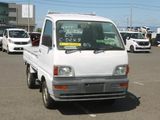
Ref# UW-mtml91b0ht54
DIYATA JAPAN CO.,LTD
1997 Mitsubishi Minicab Truck V-U41T
350kg
- Mileage
- 113,200 km
- Year
- 1997
- Engine
- 660cc
- Trans.
- Manual
FOBPrice$950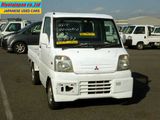
Ref# UW-6969a0625dbc1
DIYATA JAPAN CO.,LTD
1999 Mitsubishi Minicab Truck GD-U61T
350kg
- Mileage
- 95,800 km
- Year
- 1999
- Engine
- 660cc
- Trans.
- Manual
FOBPrice$950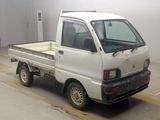
Ref# UW-mup8iaeshxlq
DIYATA JAPAN CO.,LTD
1997 Mitsubishi Minicab Truck V-U41T
350kg
- Mileage
- 60,600 km
- Year
- 1997
- Engine
- 660cc
- Trans.
- Manual
FOBPrice$1,050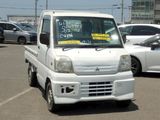
Ref# UW-6a3ceda019515
DIYATA JAPAN CO.,LTD
2000 Mitsubishi Minicab Truck GD-U61T
350kg
- Mileage
- 87,400 km
- Year
- 2000
- Engine
- 660cc
- Trans.
- Manual
FOBPrice$1,100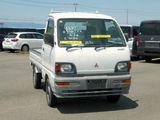
Ref# UW-6a02dd408a65c
DIYATA JAPAN CO.,LTD
1996 Mitsubishi Minicab Truck V-U42T
350kg 4WD
- Mileage
- 84,300 km
- Year
- 1996
- Engine
- 660cc
- Trans.
- Manual
FOBPrice$1,200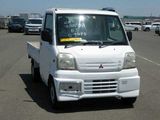
Ref# UW-694a1643848a4
DIYATA JAPAN CO.,LTD
1999 Mitsubishi Minicab Truck GD-U61T
350kg
- Mileage
- 123,300 km
- Year
- 1999
- Engine
- 660cc
- Trans.
- Manual
FOBPrice$1,200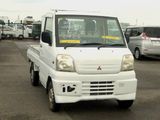
Ref# UW-6a3a25e017171
DIYATA JAPAN CO.,LTD
1999 Mitsubishi Minicab Truck GD-U61T
350kg
- Mileage
- 96,500 km
- Year
- 1999
- Engine
- 660cc
- Trans.
- Manual
FOBPrice$1,300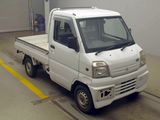
Ref# UW-mup76rg15ls9
DIYATA JAPAN CO.,LTD
2000 Mitsubishi Minicab Truck GD-U61T
350kg
- Mileage
- 99,200 km
- Year
- 2000
- Engine
- 660cc
- Trans.
- Manual
FOBPrice$1,350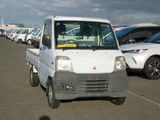
Ref# UW-694a669508cba
DIYATA JAPAN CO.,LTD
1999 Mitsubishi Minicab Truck GD-HA6
350kg
- Mileage
- 75,500 km
- Year
- 1999
- Engine
- 660cc
- Trans.
- Manual
FOBPrice$1,350
Ref# UW-6944bc48ade49
DIYATA JAPAN CO.,LTD
2001 Mitsubishi Minicab Truck GD-U61T
350kg
- Mileage
- 93,700 km
- Year
- 2001
- Engine
- 660cc
- Trans.
- Automatic
FOBPrice$1,400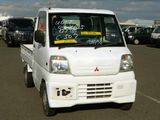
Ref# UW-694a16a50479b
DIYATA JAPAN CO.,LTD
1999 Mitsubishi Minicab Truck GD-U61T
350kg
- Mileage
- 84,400 km
- Year
- 1999
- Engine
- 660cc
- Trans.
- Manual
FOBPrice$1,400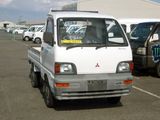
Ref# UW-mtwftsq55q8h
DIYATA JAPAN CO.,LTD
1995 Mitsubishi Minicab Truck V-U42T
350kg 4WD
- Mileage
- 96,100 km
- Year
- 1995
- Engine
- 660cc
- Trans.
- Manual
FOBPrice$1,450
Ref# UW-mtsfssyxosbx
DIYATA JAPAN CO.,LTD
1992 Mitsubishi Minicab Truck V-U42T
350kg 4WD
- Mileage
- 59,000 km
- Year
- 1992
- Engine
- 660cc
- Trans.
- Manual
FOBPrice$1,500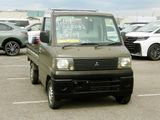
Ref# UW-mt19quukckd9
DIYATA JAPAN CO.,LTD
2001 Mitsubishi Minicab Truck GD-U61T
350kg 4WD
- Mileage
- 104,500 km
- Year
- 2001
- Engine
- 660cc
- Trans.
- Manual
FOBPrice$1,500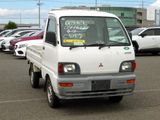
Ref# UW-mt2s6xsj460h
DIYATA JAPAN CO.,LTD
1996 Mitsubishi Minicab Truck V-U42T
350kg 4WD
- Mileage
- 33,800 km
- Year
- 1996
- Engine
- 660cc
- Trans.
- Manual
FOBPrice$1,550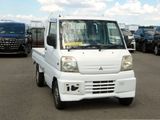
Ref# UW-mrx7f6xvfssd
DIYATA JAPAN CO.,LTD
2000 Mitsubishi Minicab Truck GD-U61T
350kg
- Mileage
- 54,600 km
- Year
- 2000
- Engine
- 660cc
- Trans.
- Manual
FOBPrice$1,550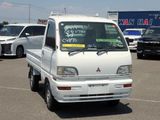
Ref# UW-6a4c9ecfb62a4
DIYATA JAPAN CO.,LTD
1997 Mitsubishi Minicab Truck V-U41T
350kg
- Mileage
- 107,000 km
- Year
- 1997
- Engine
- 660cc
- Trans.
- Manual
FOBPrice$1,550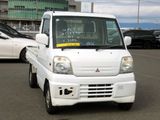
Ref# UW-698d4895251a4
DIYATA JAPAN CO.,LTD
1999 Mitsubishi Minicab Truck GD-U62T
350kg 4WD
- Mileage
- 130,400 km
- Year
- 1999
- Engine
- 660cc
- Trans.
- Manual
FOBPrice$1,550
Ref# UW-mtmlhw17glh3
DIYATA JAPAN CO.,LTD
1997 Mitsubishi Minicab Truck V-U41T
350kg
- Mileage
- 59,700 km
- Year
- 1997
- Engine
- 660cc
- Trans.
- Manual
FOBPrice$1,600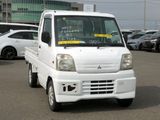
Ref# UW-69940c76eda69
DIYATA JAPAN CO.,LTD
2000 Mitsubishi Minicab Truck GD-U61T
350kg
- Mileage
- 112,700 km
- Year
- 2000
- Engine
- 660cc
- Trans.
- Automatic
FOBPrice$1,600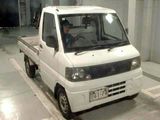
Ref# UW-muf7b7v0on4g
DIYATA JAPAN CO.,LTD
2001 Mitsubishi Minicab Truck GD-U61T
350kg
- Mileage
- 29,500 km
- Year
- 2001/11
- Engine
- 660cc
- Trans.
- Automatic
FOBPrice$1,800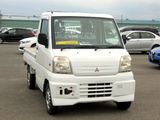
Ref# UW-6a34e9bbd0fb4
DIYATA JAPAN CO.,LTD
1999 Mitsubishi Minicab Truck GD-U61T
350kg
- Mileage
- 69,200 km
- Year
- 1999
- Engine
- 660cc
- Trans.
- Automatic
FOBPrice$1,800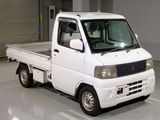
Ref# UW-mtwd8n8u00cu
DIYATA JAPAN CO.,LTD
2001 Mitsubishi Minicab Truck GD-U62T
350kg 4WD
- Mileage
- 111,200 km
- Year
- 2001/8
- Engine
- 660cc
- Trans.
- Automatic
FOBPrice$1,950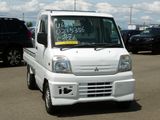
Ref# UW-ms4crkv84il7
DIYATA JAPAN CO.,LTD
2000 Mitsubishi Minicab Truck GD-U62T
350kg 4WD
- Mileage
- 98,400 km
- Year
- 2000
- Engine
- 660cc
- Trans.
- Automatic
FOBPrice$2,100
Ref# UW-ms77tufwjyo2
DIYATA JAPAN CO.,LTD
1993 Mitsubishi Minicab Truck V-U42T
Fire Truck 350kg 4WD
- Mileage
- 3,400 km
- Year
- 1993
- Engine
- 660cc
- Trans.
- Manual
FOBPrice$4,800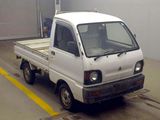 SOLD OUT
Ref# UW-mtwf3o5oynam
DIYATA JAPAN CO.,LTD
1991 Mitsubishi Minicab Truck V-U41T
350kg
- Mileage
- 40,700 km
- Year
- 1991
- Engine
- 660cc
- Trans.
- Manual
FOBPrice$950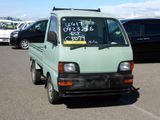 SOLD OUT
Ref# UW-msh9154gyffu
DIYATA JAPAN CO.,LTD
1997 Mitsubishi Minicab Truck V-U41T
350kg
- Mileage
- 78,200 km
- Year
- 1997
- Engine
- 660cc
- Trans.
- Manual
FOBPrice$1,100 SOLD OUT
Ref# UW-6a4cc37092469
DIYATA JAPAN CO.,LTD
1996 Mitsubishi Minicab Truck U42T
350kg 4WD
- Mileage
- 81,100 km
- Year
- 1996
- Engine
- 660cc
- Trans.
- Manual
FOBPrice$1,200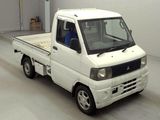 SOLD OUT
Ref# UW-muz7lajcnwe5
DIYATA JAPAN CO.,LTD
2002 Mitsubishi Minicab Truck GD-U61T
350kg
- Mileage
- 31,500 km
- Year
- 2002/5
- Engine
- 660cc
- Trans.
- Automatic
FOBPrice$1,500 SOLD OUT
Ref# UW-mt2ssaeq6qra
DIYATA JAPAN CO.,LTD
1997 Mitsubishi Minicab Truck V-U42T
350kg 4WD
- Mileage
- 32,100 km
- Year
- 1997
- Engine
- 660cc
- Trans.
- Manual
FOBPrice$1,700 SOLD OUT
Ref# UW-6a20e5f818a4b
DIYATA JAPAN CO.,LTD
2000 Mitsubishi Minicab Truck U61T
350kg
- Mileage
- 62,100 km
- Year
- 2000
- Engine
- 660cc
- Trans.
- Manual
FOBPrice$1,700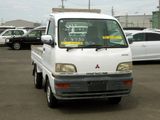 SOLD OUT
Ref# UW-6a3dfe9d2d160
DIYATA JAPAN CO.,LTD
1998 Mitsubishi Minicab Truck U42T
350kg 4WD
- Mileage
- 99,100 km
- Year
- 1998
- Engine
- 660cc
- Trans.
- Manual
FOBPrice$1,750 SOLD OUT
Ref# UW-mu6oo29bc6qw
DIYATA JAPAN CO.,LTD
2000 Mitsubishi Minicab Truck GD-U62T
350kg 4WD
- Mileage
- 63,500 km
- Year
- 2000
- Engine
- 660cc
- Trans.
- Manual
FOBPrice$1,950


Buying a Mitsubishi Minicab kei truck in the USA
What decides whether a Minicab can be imported is the build date on the chassis plate, not the model year in the listing.
The 25-year rule, applied to the Minicab
A vehicle may be imported into the United States without FMVSS and EPA compliance once 25 years have passed from the month it was built. The U-series Minicab covers the years that qualify today; the later DS16T becomes eligible far in the future.
| Generation | Built | Status today | Listed |
|---|---|---|---|
| U41T / U42T | 1991–1999 | Eligible now | 14 |
| U61T / U62T | 1999–2014 | Eligible if built in or before October 2001 Eligible soon for the following 12 months | 18 |
| DS16T (Carry-based) | 2014 onwards | Not yet — each vehicle qualifies 25 years after its own build month | 0 |
| Other / chassis code not identified | — | Check the build month on each listing | 1 |
Counts use the build month from the listing. Where it is missing, the first registration date in Japan is used instead, since a truck is always built before it is registered; trucks that cannot be confirmed either way are not counted. Always confirm the build date on the chassis plate with the seller before ordering.
Registration is decided by your state
Clearing customs and registering for road use are two separate questions. Federal eligibility is the 25-year rule above; whether a kei truck can be titled, plated and driven on public roads — and on which roads — is set by each state, and several states have changed their position in recent years. Check the reported status for your state
Getting it there
From purchase to a US port the sequence is: order → payment → export certificate and de-registration in Japan → booking → RoRo or container loading → B/L issued → arrival, customs entry and duty. Ocean freight, port charges, the customs broker and duty are on top of the FOB price shown in the listings. See the steps, documents and cost ranges
Freight and duty figures on the guide pages are reference ranges collected from recent shipments, not a quotation.
What buyers use a Mitsubishi Minicab for
3.40 m long, 1.48 m wide, rated at 350 kg, with a simple three-cylinder and about 48 PS. It does the same work as the rest of the class for less money.
A first kei truck
The lowest entry price of the five, and nothing unusual under it to learn. If the plan is to try a kei truck before committing, this is the one that costs least to find out on.
Look for: 2WD if the ground is firm, 4WD if it is not. Budget for tyres and a timing belt if there is no recent history.
Property and facility fleets
Schools, resorts, farms and factories that need two or three yard trucks rather than one special one. Cheap to buy, cheap to insure, simple to fix.
Look for: Matching drivetrains across the units, and an automatic if several people will drive them.
Light delivery and shop errands
Short runs with a modest load, where the money saved on the truck matters more than the last 5 PS.
Look for: 2WD, 5-speed manual, a clean bed and a working heater.
Hunting leases and back-country property
Quiet, light and cheap enough that a scratch on a trail is not a problem — the reason many US buyers treat a Minicab as a dedicated off-road vehicle rather than a road truck.
Look for: 4WD, extra low, tyres with tread left. Road use is a separate question, decided by your state.
Shop and parts hauler
A second truck for moving stock between buildings, where the job is short trips with awkward loads and a three-way drop bed does most of the work.
Look for: A sound bed floor and drop sides that latch properly. Rust matters more than mileage.
Seasonal and occasional work
Sits between jobs without costing much to own, and starts when the season comes round again.
Look for: A truck with documented recent use rather than the lowest mileage in the list.
The Minicab’s own contribution is cost: the cheapest of the five to buy, with a three-cylinder that any shop comfortable with older Japanese vehicles can work on. See the job-to-specification matrix
Mitsubishi Minicab kei truck: strengths and weak points

Yoshisuke MayumiFormer Editor-in-Chief,
Carsensor
Mayumi's POINT
Strengths
For the 1999 kei standards the Mitsubishi Minicab truck adopted a semi-cab layout with a larger crumple zone for better crash safety, while holding the truck's wheelbase to 2,200 mm to balance safety against turning ability. The three-cylinder 3G83 engine used MVV lean-burn technology, tuned for easy, practical response from low revs. Work-friendly features such as Easy Select 4WD, which switches between 2WD and 4WD at the push of a button, and a 4-speed automatic added to its appeal.
Weak points
Its balance of safety, performance and usability was good, but next to the Acty's MR layout, the Sambar's RR and four cylinders, and the sheer sales power of the Carry and Hijet, it lacked an easy-to-grasp selling point. Sales also suffered from the recall cover-up revealed in 2000, and it never caught the two market leaders. The 3G83 is a long-serving, proven engine, but on high-mileage trucks watch for oil consumption and white smoke caused by worn valve stem seals.
Mitsubishi Minicab vs the other four kei trucks
The five mainstream kei trucks share the same regulated body size and the same 350 kg rating. What differs is the engine layout, how tightly they turn, what they cost and how easily they are found.
| Model | Engine layout | Output, standard | Turning circle | FOB guide | Listed |
|---|---|---|---|---|---|
| Honda Acty kei truck | Mid-engine, under the bed | approx. 46 PS | approx. 4.5 m | $2,200–3,500 | 57 |
| Suzuki Carry kei truck | Under the seat | approx. 50 PS | approx. 4.1 m | $1,800–2,800 | 72 |
| Daihatsu Hijet mini truck | Under the seat | approx. 45–48 PS | approx. 3.8 m | $1,700–2,700 | 101 |
| Subaru Sambar kei truck | Rear engine | approx. 46 PS | largest in class | $2,300–3,800 | 35 |
| Mitsubishi Minicab this page | Under the seat | approx. 48 PS | approx. 4.0–4.4 m | $1,500–2,500 | 33 |
Where the Minicab sits: the lowest FOB band of the five and the simplest mechanically, which makes it the sensible choice for a first kei truck or a yard fleet. It carries no premium for a badge, so you pay for the truck rather than the name. What you give up is the parts depth of a Carry, the body choice of a Hijet and the resale strength of an Acty or a Sambar. Read the full five-model comparison
FOB guides assume a standard body in ordinary condition. Dump beds, supercharged versions and custom builds sit outside them. Reference ranges, not a quotation.
Mitsubishi Minicab truck FAQ
Questions specific to this model. Cost, shipping and state rules are covered on the guide pages.
Not for the years that matter to a US buyer. The U41T/U42T and U61T/U62T generations are Mitsubishi’s own design with the 3G83 engine. From 2014 the Minicab truck became a rebadged Suzuki Carry (DS16T) — but that generation is not eligible for US import for many years yet. The Minicab has also been sold under other badges in some years, which is why the same truck can appear under more than one name.
Any Minicab built 25 or more years ago — today that means built in or before October 2001. That covers the U41T/U42T generation outright, and a growing part of the U61T/U62T range as each build month passes 25 years. Eligibility is counted from the build month on the chassis plate, not from the model year.
The Minicab is the cheaper truck to buy and the simpler one to service. The Acty costs more, feels more settled on the road because of its mid-engine layout, and holds its value better in the US because buyers ask for it by name. If the truck is a tool for a yard or a property, the Minicab does the same work for less. See the five models side by side
Minicab trucks listed on UCARWORLD sit mainly in the US$1,500–2,500 FOB band, with the current lowest at US$950. Ocean freight, port and terminal charges, the customs broker, ISF and duty are on top. See the full cost breakdown
Minicab Truck Buying Guide

The Mitsubishi Minicab Truck is a hardworking light-duty truck known for its minimal turning radius that allows for stress-free handling in narrow alleys and fields. It has gained popularity for its low-floor, easy-to-load three-way opening cargo bed. It boasts durability due to its solid ladder frame and leaf springs based on an FR layout. With a wide range of options including 2WD/4WD and auxiliary transmission (for farming purposes), it offers various uses. It often gets overshadowed by the orthodox designs of the Daihatsu Hi-jet and Suzuki Carry, but the Minicab is also an intriguing option. It is widely distributed particularly in right-hand drive regions and countries subject to the 25-year rule, offering peace of mind in terms of parts supply. In this article, we carefully discuss the charm, drawbacks, comparisons with rivals, and main specifications of the easily targetable fifth generation (1990-1999), and the sixth generation (1999-2014) which has improved practicality in line with new regulations.
Fifth Generation Minicab Truck (U41T/U42T, 1990–1999) - Refining the "FundaMental Strength" in the old standard.

The Appeal of the Fifth Generation Minicab Truck
A powertrain focused on low-speed torque and sturdy suspension
The fifth generation combines the easy handling unique to the old Kei standard (total length 3,295mm x total width 1,395mm) with the reliable load stability required in practical situations. The main engine is a 0.66L inline three-cylinder (3G83 series; NA), with a focus on the low-middle speed torque necessary for city driving and stop & go operations in farming areas. The transmissions available include 4MT/5MT and 3AT, with the option of selecting a "farming" version equipped with auxiliary gear changes and differential lock designed for rough terrains and steep slopes. The chassis features a simple & tough ladder frame with front struts and rear leaves, and a loading bed that opens on three sides on a low platform. The vehicle's lightness and responsive steering make it easy to place exactly where you want, which is one of its main attractions. It is also easy to maintain, with durable ignition, cooling, and drivetrain that can last for a long time with basic maintenance, making it a reliable tool on site.
Drawbacks of the Fifth Generation Minicab Truck
The speed and comfort, as well as the safety features, meet the standards of the time. There's also a certain compactness to the cabin.
Due to its cab over design and short wheelbase, you cannot expect the same high-speed straight-line stability and sound insulation as a passenger car. The wind noise and high engine revs can easily become noticeable during long-distance cruises, resulting in potential fatigue. The safety features are also only up to the standards at the time, with limited ABS and airbags. The older standard implies less collision safety than next-generation vehicles, and the cabin is snug. Tall drivers may find the range of seat position adjustments inadequate. Furthermore, cars equipped with a 3AT may have higher cruising revs, and may not match a 5MT in terms of fuel efficiency and quietness. When purchasing, it's advisable to thoroughly check for rust (frame, bed edges, and under the cabin), undercarriage bushings and shocks, and the condition of the brakes for peace of mind.
Rival of the fifth generation Minicab Truck
Suzuki Carry / Daihatsu Hijet / Honda Acty
The formidable rivals from the same era are the Carry, advantageous in the volume of distribution and affordable parts; the HiJet, with an exceptional overall balance; and the Acty, with strong traction when loading, due to the MR layout (engine located right behind the seats). The Minicab holds its position as a "steady and durable work vehicle", and the option of 4WD with a sub-transmission for various purposes, including non-paved and ridge roads, is appealing. If you're mostly delivering around town, the 2WD + 5MT will offer nimble performance; if you're in farms or mountainous areas, the 4WD and low-speed biased sub-transmission will provide gradual, manageable movement. The used price varies significantly between individual units, so be sure to assess based on the condition of the engine, undercarriage, and truck bed floor.
Specifications of the Fifth Generation Minicab Truck
Size: Overall length 3,295mm × Overall width 1,395mm × Overall height about 1,700–1,800mm Wheelbase: About 1,900mm Vehicle weight: Approximately 650–730kg (Varies depending on specifications) Engine: 0.66L Inline 3 (3G83 series/NA) Transmission: 4MT/5MT/3AT Drive system: FR (2WD), Part-time 4WD (with sub-transmission and differential lock settings) Suspension: Front strut/Rear leaf Fuel efficiency (10-15 mode): Approximately 14–17km/L (Varies depending on specifications and model year)
6th Generation Minicab Truck (U61T/U62T, 1999–2014) - Improved practicality with new standards, refined usability through maturation.


The Appeal of the Sixth Generation Minicab Truck
Improved usability through the new standard body, refinement, and maturation of the 3G83.
The model was fully updated in 1999 to conform to the new standards for mini vehicles, with a length of 3,395mm and a width of 1,475mm. This increased interior and cargo space, enhancing usability for daily loading and unloading and long-term operations. The 0.66L straight-3 engine (predominantly 3G83 series, naturally aspirated) continued to be used, and its control and emission measures were optimized to balance ease of handling and durability. Both 5MT and AT (primarily 3-speed, with 4-speed options depending on the model year) transmissions were available, and some models also allowed for the selection of part-time 4WD with secondary transmission and differential lock. Improvements directly relating to use cases, such as optimizing the minimum turning radius, enhancing rust resistance, and revising the sides and hook positions of the cargo space were gradually implemented. These features were refined over the model's long life to be "quiet, durable, and easy to use." There is also a wide variety of used vehicles available, making it easy to find options to suit your budget and needs.
Disadvantages of the Sixth Generation Minicab Truck
Significant specification differences - Verification of model year and grade is essential.
The lifespan of the model is long, so equipment such as AT (3AT→4AT), safety features (airbag, ABS), rust prevention specifications, and loading platform equipment vary widely with the year and grade. When purchasing, always identify the year, type, drive system, and equipment to make sure it suits your needs. The design is still cab-over, and expecting a comfortable and quiet ride like a passenger car would be a mismatch. If you drive long distances, it's realistic to aim for a "later-equipped model" with multistage AT, additional soundproofing materials, and improved seating. Also, regular ATF maintenance is important for automatic transmissions, and checking the operation system and rust on the undercarriage is crucial for 4WD models. Don't overlook the corrosion on the loading platform floor or any looseness in the tailgate hinges.
Rival of the 6th generation Minicab Truck
Suzuki Carry / Daihatsu Hijet / Honda Acty (later model)
The new standard generation's biggest competitors are the superior Carry in product strength and volume, the Hi-zet with high overall strength accumulated through annual improvements, and the Acty, excellent in road surface tracking with its MR layout. The Minicab is characterized by its "solid and easy-to-handle basic design + necessary and sufficient equipment," especially attractive for its off-road/farmland suitability with 4WD + sub-transmission, simple serviceability, and affordable price range. The wide distribution of parts also represents a significant advantage for foreign users, lowering the hurdle for maintenance and repairs. If you frequently perform work tasks, a 4WD + low-speed gear model is suggested, on the other hand, if you are mainly driving in the city, choosing a model with 2WD + 5MT or multi-stage AT will increase your satisfaction.
Specifications of the 6th Generation Minicab Truck
Size: Total length 3,395mm × total width 1,475mm × total height approximately 1,750–1,900mm (Varies based on features such as high roof) Wheelbase: Approximately 1,900–1,915mm Vehicle weight: Approximately 670–820kg (Difference depending on specifications) Engine: 0.66L Straight-3 (3G83 series / Mostly NA) Transmission: 5MT, AT (3AT transition to 4AT depending on the year model) Drive system: FR (2WD), Part time 4WD (Sub-transmission lock setting available) Minimum turning radius: Reduced for easy maneuverability (Optimized annually) Fuel efficiency reference (10-15 mode / Varies depending on year and specifications): Approximately 15–19km/L
Mitsubishi Minicab Truck's Most Popular Year Variations
- 2002 Mitsubishi Minicab Truck
- 2001 Mitsubishi Minicab Truck
- 2000 Mitsubishi Minicab Truck
- 1999 Mitsubishi Minicab Truck
- 1998 Mitsubishi Minicab Truck
- 1997 Mitsubishi Minicab Truck
- 1996 Mitsubishi Minicab Truck
- 1995 Mitsubishi Minicab Truck
- 1993 Mitsubishi Minicab Truck
- 1992 Mitsubishi Minicab Truck
- 1991 Mitsubishi Minicab Truck