


Used Mitsubishi Pajero Mini for Sale
Set your destination to see the total price including shipping (C&F).
14 Results



Ref# UW-694cd2585481f
DIYATA JAPAN CO.,LTD
2004 Mitsubishi Pajero Mini H58A
VR 4WD
- Mileage
- 106,400 km
- Year
- 2004/2
- Engine
- 660cc
- Trans.
- Automatic
FOB$1,300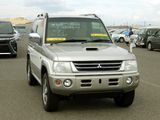
Ref# UW-694cd2585481f
DIYATA JAPAN CO.,LTD
2004 Mitsubishi Pajero Mini H58A
VR 4WD
- Mileage
- 106,400 km
- Year
- 2004/2
- Engine
- 660cc
- Trans.
- Automatic
Price$1,300
Ref# UW-6aa613c9a1cd4
INSPIRE LLC
2007 Mitsubishi Pajero Mini ABA-H58A
リミテッドエディションVR
- Mileage
- 59,690 km
- Year
- 2007/4
- Engine
- 659cc
- Trans.
- AT
FOB$4,166
Ref# UW-6aa613c9a1cd4
INSPIRE LLC
2007 Mitsubishi Pajero Mini ABA-H58A
リミテッドエディションVR
- Mileage
- 59,690 km
- Year
- 2007/4
- Engine
- 659cc
- Trans.
- AT
Price$4,166
Ref# UW-6a89128888763
INSPIRE LLC
2007 Mitsubishi Pajero Mini ABA-H58A
VR
- Mileage
- 59,500 km
- Year
- 2007/8
- Engine
- 659cc
- Trans.
- AT
FOB$4,228
Ref# UW-6a89128888763
INSPIRE LLC
2007 Mitsubishi Pajero Mini ABA-H58A
VR
- Mileage
- 59,500 km
- Year
- 2007/8
- Engine
- 659cc
- Trans.
- AT
Price$4,228
Ref# UW-6a754c516b653
INSPIRE LLC
2012 Mitsubishi Pajero Mini ABA-H58A
エクシード
- Mileage
- 99,465 km
- Year
- 2012/9
- Engine
- 659cc
- Trans.
- AT
FOB$4,290
Ref# UW-6a754c516b653
INSPIRE LLC
2012 Mitsubishi Pajero Mini ABA-H58A
エクシード
- Mileage
- 99,465 km
- Year
- 2012/9
- Engine
- 659cc
- Trans.
- AT
Price$4,290
Ref# UW-6a6428a62d206
INSPIRE LLC
2011 Mitsubishi Pajero Mini ABA-H58A
VR
- Mileage
- 51,920 km
- Year
- 2011/1
- Engine
- 659cc
- Trans.
- AT
FOB$4,975
Ref# UW-6a6428a62d206
INSPIRE LLC
2011 Mitsubishi Pajero Mini ABA-H58A
VR
- Mileage
- 51,920 km
- Year
- 2011/1
- Engine
- 659cc
- Trans.
- AT
Price$4,975
Ref# UW-6aa4c25f3729c
INSPIRE LLC
2012 Mitsubishi Pajero Mini ABA-H58A
エクシード
- Mileage
- 57,704 km
- Year
- 2012/1
- Engine
- 659cc
- Trans.
- AT
FOB$5,596
Ref# UW-6aa4c25f3729c
INSPIRE LLC
2012 Mitsubishi Pajero Mini ABA-H58A
エクシード
- Mileage
- 57,704 km
- Year
- 2012/1
- Engine
- 659cc
- Trans.
- AT
Price$5,596
Ref# UW-6a851dc75f5fe
INSPIRE LLC
2009 Mitsubishi Pajero Mini ABA-H58A
エクシード
- Mileage
- 23,350 km
- Year
- 2009/9
- Engine
- 659cc
- Trans.
- AT
FOB$7,462
Ref# UW-6a851dc75f5fe
INSPIRE LLC
2009 Mitsubishi Pajero Mini ABA-H58A
エクシード
- Mileage
- 23,350 km
- Year
- 2009/9
- Engine
- 659cc
- Trans.
- AT
Price$7,462 SOLD OUT
Ref# UW-69f07ec0c8d8a
DIYATA JAPAN CO.,LTD
1999 Mitsubishi Pajero Mini H58A
DUKE 4WD
- Mileage
- 120,600 km
- Year
- 1999
- Engine
- 660cc
- Trans.
- Automatic
FOB$1,900 SOLD OUT
Ref# UW-69f07ec0c8d8a
DIYATA JAPAN CO.,LTD
1999 Mitsubishi Pajero Mini H58A
DUKE 4WD
- Mileage
- 120,600 km
- Year
- 1999
- Engine
- 660cc
- Trans.
- Automatic
Price$1,900 SOLD OUT
Ref# UW-6a0c2b07142e6
DIYATA JAPAN CO.,LTD
2001 Mitsubishi Pajero Mini H58A
4WD
- Mileage
- 93,300 km
- Year
- 2001/6
- Engine
- 660cc
- Trans.
- Automatic
FOB$2,200 SOLD OUT
Ref# UW-6a0c2b07142e6
DIYATA JAPAN CO.,LTD
2001 Mitsubishi Pajero Mini H58A
4WD
- Mileage
- 93,300 km
- Year
- 2001/6
- Engine
- 660cc
- Trans.
- Automatic
Price$2,200 SOLD OUT
Ref# UW-mtmg9f2t0mba
DIYATA JAPAN CO.,LTD
2000 Mitsubishi Pajero Mini GF-H58A
4WD
- Mileage
- 57,100 km
- Year
- 2000
- Engine
- 660cc
- Trans.
- Automatic
FOB$2,500 SOLD OUT
Ref# UW-mtmg9f2t0mba
DIYATA JAPAN CO.,LTD
2000 Mitsubishi Pajero Mini GF-H58A
4WD
- Mileage
- 57,100 km
- Year
- 2000
- Engine
- 660cc
- Trans.
- Automatic
Price$2,500 SOLD OUT
Ref# UW-6aa7653f7d719
INSPIRE LLC
2011 Mitsubishi Pajero Mini ABA-H53A
XR
- Mileage
- 87,300 km
- Year
- 2011/1
- Engine
- 659cc
- Trans.
- AT
FOB$2,324 SOLD OUT
Ref# UW-6aa7653f7d719
INSPIRE LLC
2011 Mitsubishi Pajero Mini ABA-H53A
XR
- Mileage
- 87,300 km
- Year
- 2011/1
- Engine
- 659cc
- Trans.
- AT
Price$2,324 SOLD OUT
Ref# UW-6a9cd941a7e58
INSPIRE LLC
2011 Mitsubishi Pajero Mini ABA-H58A
VR
- Mileage
- 102,330 km
- Year
- 2011/10
- Engine
- 659cc
- Trans.
- Manual
FOB$3,704 SOLD OUT
Ref# UW-6a9cd941a7e58
INSPIRE LLC
2011 Mitsubishi Pajero Mini ABA-H58A
VR
- Mileage
- 102,330 km
- Year
- 2011/10
- Engine
- 659cc
- Trans.
- Manual
Price$3,704 SOLD OUT
Ref# UW-6a924d28c9cee
INSPIRE LLC
2011 Mitsubishi Pajero Mini ABA-H58A
プレミアムセレクション
- Mileage
- 105,300 km
- Year
- 2011/9
- Engine
- 659cc
- Trans.
- AT
FOB$3,831 SOLD OUT
Ref# UW-6a924d28c9cee
INSPIRE LLC
2011 Mitsubishi Pajero Mini ABA-H58A
プレミアムセレクション
- Mileage
- 105,300 km
- Year
- 2011/9
- Engine
- 659cc
- Trans.
- AT
Price$3,831 SOLD OUT
Ref# UW-6a8d07288e043
INSPIRE LLC
2012 Mitsubishi Pajero Mini ABA-H58A
VR
- Mileage
- 22,035 km
- Year
- 2012/3
- Engine
- 659cc
- Trans.
- Automatic
FOB$6,771 SOLD OUT
Ref# UW-6a8d07288e043
INSPIRE LLC
2012 Mitsubishi Pajero Mini ABA-H58A
VR
- Mileage
- 22,035 km
- Year
- 2012/3
- Engine
- 659cc
- Trans.
- Automatic
Price$6,771


Mitsubishi Pajero Mini Purchase Guide

The Mitsubishi Pajero Mini is a 3-door SUV that brings the atmosphere of Mitsubishi's full-fledged SUV "Pajero" down to a compact car size. The first generation debuted in 1994, and was sold for about 19 years until its production ended in 2013. The Japanese specification features a 660cc engine, and it gained popularity as a model that is easy to handle in city driving, snowy roads, and light unpaved roads. For overseas used car buyers, the compact body and distinctive appearance are major attractions. The body, which is less than 3.3 meters in length, offers excellent maneuverability even in narrow alleys and in urban areas with limited parking spaces. Moreover, the quality and reliability unique to Japanese compact cars are well recognized. As years have passed since its production ended, selecting a vehicle in good condition is particularly important for this model.
The first generation Mitsubishi Pajero Mini (H51A/H56A) (1994-1998) - The origin where you can experience the Pajero-like atmosphere in a compact size.
The Charm of the First Generation Mitsubishi Pajero Mini
A genuine SUV-style design packed into a compact body.
The charm of the first-generation Pajero Mini lies in its robust appearance, which reminds us of the Pajero, even though it's a compact car. Its boxy body, rear spare tire, and high seating position provide visual satisfaction. The front face employs a design language common to the Pajero of that era, giving it a distinctive look that stands out even in a parking lot. It's equipped with an Easy Select 4WD, which allows for changes between 2WD, 4WD Hi, and 4WD Lo, offering a full-fledged configuration with an auxiliary transmission, despite being a compact SUV. You can drive in 2WD for better fuel efficiency in the city, switch to 4WD Hi on snowy or gravel roads, and 4WD Lo on steep slopes or deep rough roads, making it a versatile vehicle. Differences in Grade Levels and Equipment The first-generation models are generally available in three grades: high-end, standard, and budget-friendly. The high-end grades come with a turbo engine, aluminum wheels, electric folding mirrors, fog lamps, and other features. The standard grade mainly features naturally aspirated engines and necessary equipment, keeping the cost down. In the used car market, there's a high circulation of high-end grades with turbo, and the condition varies greatly, so it's important to check the combination of grade and model year.
Drawbacks of the First-Generation Mitsubishi Pajero Mini
Beware of the 3-speed AT and appropriate aging for its model year.
The initial generation is a vehicle from the 1990s, and when purchasing, you should expect some degree of degradation based on its age. In particular, it's important to check the condition of the underbody, wheel-play, the engine for any oil seepage, the turbocharging system for turbocharged models, and how well the 4WD mechanism functions. Corrosion on the underbody is common in cars from snowy regions, often due to the effects of de-icing agents that can cause corrosion that extends to the frame and members. Checking the wheel-play (ball joints, bushings) and the turbocharging system for turbocharged models (hoses, actuators) is a must during test drives and when lifting. Additionally, because automatic transmission models have a 3-speed automatic transmission, the engine speed tends to be high on highways. Therefore, quietness and a sense of effortless cruising capability may not be as good as in modern cars. If you value long-distance functionality, you'll want to consider not just the condition of the car, but also whether it's a manual or automatic transmission model. Manual transmission models have five speeds, which allows for better utilization of the engine's characteristics and are relatively simple in terms of maintenance.
Rivals of the first-generation Mitsubishi Pajero Mini
Suzuki Jimny SJ Series/JA Series
A notable competitor of the first generation Pajero Mini is the Suzuki Jimny SJ/JA series from the same era. The strength of the Jimny lies in its genuine off-road capabilities resulting from its ladder frame structure and three-link rigid suspension, as well as the availability of various custom parts. On the other hand, the Pajero Mini combines a sturdy chassis with a built-in monocock structure, integrating a ladder frame within a monocock body. Despite having an independent suspension for its front wheels, it is equipped with a part-time 4WD, with a sub-transmission featured in its 4WD vehicles, and can adequately handle light off-road conditions and snowy roads. If your emphasis is on more serious off-road driving, the Jimny would be a prime choice. However, if you are seeking a blend of an SUV-like appearance and easy handling for city driving, the Pajero Mini would be a preferable option. In addition, the fact that the SJ/JA series Jimny circulated simultaneously with the Pajero Mini, and that you can compare conditions within the same budget, adds to the charm.
Specifications of the first-generation Mitsubishi Pajero Mini
・Engine: 4A30 type 660cc inline 4-cylinder gasoline, natural aspiration or turbo ・Transmission: 5-speed MT, 3-speed AT ・Driving system: FR, Part-time 4WD with Easy Select ・Suspension (Front): MacPherson Strut ・Suspension (Rear): 5 Link Coil ・Length x Width x Height: Approximately 3,395 x 1,395 x 1,600mm ・Features: H51A is mainly distributed as a 2WD series, while H56A mainly circulates as a 4WD series. 4WD vehicles have a sub-transmission that allows switching between 2WD, 4WD Hi, and 4WD Lo. Depending on the grade, there are naturally aspirated and turbo variants, with differences in equipment and exterior design.
Second-generation Mitsubishi Pajero Mini (H53A/H58A) (1998-2013) - A long-lived model with improved practicality as a new standard mini vehicle.

The Appeal of the 2nd Generation Mitsubishi Pajero Mini
Evolved for daily use while retaining the original's unique character.
The second-generation Pajero Mini continues the SUV-like atmosphere of its predecessor but enhances its practicality to meet the new regulations for light vehicles. It complies with the 1998 new standard dimensions of 3,400mm in total length and 1,480mm in total width, which slightly increases its vehicle width from the first generation, resulting in improved cabin space and stability. The enhanced stability of the body and the ease of use of the interior make it more manageable for users mainly driving in the city. While inheriting the first generation's SUV-like atmosphere in its appearance, the front face has been made more modern and sophisticated. Changes were also made to the shapes of bumpers and lights in both early and late styles. The Easy Select 4WD continues to be adopted for 4WD vehicles, allowing users to switch between 2WD for daily driving and 4WD for snowy or unpaved roads. Automatic transmission vehicles have evolved from 3-speed to 4-speed, allowing for a lower engine RPM during high-speed cruising compared to the first generation. For overseas customers, it is an easy-to-consider model as a light SUV that is not too classic but easy to use on a daily basis.
Grade Variations and Special Edition Vehicles
The second generation enjoys a comprehensive grade lineup due to its long sales period. The main grades are comprised of VR (high-end), XR (mid-range), and ZR (economical) models, with the higher grades equipped with exclusive bumpers, fog lamps, aluminum wheels, and leather-wrapped steering wheel. There have been several instances of special editions and limited colors, resulting in vehicles with different interiors and exteriors from the standard grades circulating in the market. It is recommended to not only check the grade name, but also the presence of optional equipment when purchasing.
Drawbacks of the second-generation Mitsubishi Pajero Mini
Has been on sale for a long period, with significant differences in model year and maintenance history.
There's a wide range of variations in terms of year, grade, equipment, and condition among the second generation models, since they were produced over an extended period. Please note that, there could be non-compatible parts between the early models (around 1998-2002) and the later models (from 2002 onwards). Therefore, it's important to verify the year of manufacture when arranging for replacement parts. When purchasing, not only the mileage but maintenance record, undercarriage rust, abnormal engine noise, autonomous transmission shifting condition, acceleration feel for turbocharged vehicles, and 4WD switching operations should be checked. The base engine is the 4A30 type, but there are differences like naturally aspirated, turbocharged, and different valve operations according to the year and grade. For vehicles with MIVEC turbo, the increased power performance comes with more complex maintenance, hence it's critical to understand maintenance costs beforehand. When exporting overseas, it could be difficult to find dedicated exterior and interior parts locally, which should also be taken into account. Parts specific to certain grades like door mirror covers, bumpers, and interior panels might have to be sourced from Japan, so anticipate the procurement cost and time. There is also Nissan Kicks, the first generation H59 series, as a sister model to the Pajero Mini. They share the same platform and 4WD system and are often considered as an alternative or for part replacement for Pajero Mini. When looking for maintenance information or parts, remember to check out this model as well, it might widen your options.
Rivals of the second generation Mitsubishi Pajero Mini
Suzuki Jimny JB23W
The second generation Pajero Mini typically compares with the Suzuki Jimny JB23W. The Jimny is highly popular for its off-road capabilities, durability, and abundance of after-sales parts. On the other hand, the Pajero Mini, while not as fully off-road-oriented as the Jimny as indicated by its front strut independent and rear 5-link suspension design, comes with a tough built-in monocoque chassis plus a part-time 4WD equipped with Hi/Lo switching, offering a reliable configuration for snowy or unpaved roads. The Pajero Mini provides a smoother ride and handling for daily use, making it suitable for users who prioritize ease of use in urban areas. If you value the SUV-like appearance and manageability for everyday use, a well-maintained Pajero Mini is definitely a candidate. Note that in the international used car market, the popularity and price of JB23W are on the rise, so choosing a better-conditioned Pajero Mini with the same budget could be a valid perspective.
Specifications of the Second-Generation Mitsubishi Pajero Mini
・Engine: 4A30 type 660cc inline 4-cylinder gasoline, naturally aspirated or turbo (some grades have MIVEC turbo) ・Transmission: 5-speed MT, 4-speed AT ・Drive system: FR, part-time 4WD with Easy Select ・Suspension (front): Independent MacPherson strut ・Suspension (rear): 5-link coil ・Overall length x width x height: Approximately 3,395 x 1,475 x 1,600mm ・Features: The H53A is mainly circulated as a 2WD system, and the H58A as a 4WD system. The 4WD vehicles have a sub-transmission that can switch between 2WD, 4WD Hi, and 4WD Lo. As a long-term sales model, there are many variations in early and late versions, special edition vehicles, and equipment differences, making it a generation that values condition over model year when buying.