


Used Toyota Prius for Sale — 1,252 listed
Set your destination to see the total price including shipping (C&F).
1,252 Results

Ref# UW-6a0e6836e6b01
YAMAKATSU CO.,LTD
2014 Toyota Prius DAA-ZVW30
S
- Mileage
- 80,572 km
- Year
- 2014/10
- Engine
- 1,800cc
- Trans.
- Automatic
FOBPrice$4,323
Ref# UW-6a0e6841ab9b8
YAMAKATSU CO.,LTD
2013 Toyota Prius ZVW30
G TOURING SELECTION
- Mileage
- 71,538 km
- Year
- 2013/9
- Engine
- 1,800cc
- Trans.
- Automatic
FOBPrice$5,558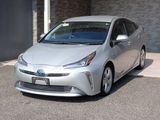
Ref# UW-6a98d8f6dcd7b
TOMISHO CO.,LTD
2019 Toyota Prius DAA-ZVW51
S Touring Selection Black Edition
- Mileage
- 123,655 km
- Year
- 2019/11
- Engine
- 1,790cc
- Trans.
- Automatic
FOBPrice$7,707.03
Ref# UW-6a0e681a364dd
YAMAKATSU CO.,LTD
2017 Toyota Prius DAA-ZVW51
A
- Mileage
- 86,531 km
- Year
- 2017/7
- Engine
- 1,800cc
- Trans.
- Automatic
FOBPrice$8,153
Ref# UW-6a0e68239d359
YAMAKATSU CO.,LTD
2017 Toyota Prius DAA-ZVW51
A
- Mileage
- 63,189 km
- Year
- 2017/5
- Engine
- 1,800cc
- Trans.
- Automatic
FOBPrice$10,438
Ref# UW-6a0e68461973e
YAMAKATSU CO.,LTD
2020 Toyota Prius DAA-ZVW51
S
- Mileage
- 66,181 km
- Year
- 2020/3
- Engine
- 1,800cc
- Trans.
- Automatic
FOBPrice$10,500
Ref# UW-6a0e682e52b3f
YAMAKATSU CO.,LTD
2021 Toyota Prius ZVW51
S
- Mileage
- 66,064 km
- Year
- 2021/4
- Engine
- 1,800cc
- Trans.
- Automatic
FOBPrice$10,808
Ref# UW-6a0e684a458d3
YAMAKATSU CO.,LTD
2022 Toyota Prius 6AA-ZVW51
S SAFTY PLUS II
- Mileage
- 4,398 km
- Year
- 2022/2
- Engine
- 1,800cc
- Trans.
- Automatic
FOBPrice$15,132
Ref# UW-mulwyrhkxk8p
INSPIRE LLC
2009 Toyota Prius DAA-ZVW30
S
- Mileage
- 65,729 km
- Year
- 2009/9
- Engine
- 1,797cc
- Trans.
- CVT
FOBPrice$2,049
Ref# UW-mut1p6mr94cz
MaccaLi inc
2009 Toyota Prius DAA-ZVW30
S
- Mileage
- 77,950 km
- Year
- 2009/12
- Engine
- 1,797cc
- Trans.
- CVT
FOBPrice$2,111
Ref# UW-6a9e2d95f1cb6
INSPIRE LLC
2010 Toyota Prius DAA-ZVW30
L
- Mileage
- 110,100 km
- Year
- 2010/3
- Engine
- 1,797cc
- Trans.
- CVT
FOBPrice$2,111
Ref# UW-6ab345d64a69e
INSPIRE LLC
2014 Toyota Prius DAA-ZVW30
S
- Mileage
- 118,060 km
- Year
- 2014/1
- Engine
- 1,797cc
- Trans.
- CVT
FOBPrice$2,360
Ref# UW-6a642b5f6c274
INSPIRE LLC
2012 Toyota Prius DAA-ZVW30
S
- Mileage
- 120,347 km
- Year
- 2012/8
- Engine
- 1,797cc
- Trans.
- CVT
FOBPrice$2,422
Ref# UW-6ab9dd2f67766
INSPIRE LLC
2012 Toyota Prius DAA-ZVW30
G
- Mileage
- 110,750 km
- Year
- 2012/9
- Engine
- 1,797cc
- Trans.
- CVT
FOBPrice$2,546
Ref# UW-6ab0a29f3181e
INSPIRE LLC
2014 Toyota Prius DAA-ZVW30
S
- Mileage
- 114,039 km
- Year
- 2014/2
- Engine
- 1,797cc
- Trans.
- CVT
FOBPrice$2,608
Ref# UW-mvvmwu2j2s5l
INSPIRE LLC
2011 Toyota Prius DAA-ZVW30
S LED Edition
- Mileage
- 97,246 km
- Year
- 2011/11
- Engine
- 1,797cc
- Trans.
- CVT
FOBPrice$2,733
Ref# UW-mvehk9eka5uu
INSPIRE LLC
2011 Toyota Prius DAA-ZVW30
S
- Mileage
- 104,653 km
- Year
- 2011/5
- Engine
- 1,797cc
- Trans.
- CVT
FOBPrice$2,733
Ref# UW-mvrcmlsa01ll
INSPIRE LLC
2009 Toyota Prius DAA-ZVW30
S
- Mileage
- 81,550 km
- Year
- 2009/12
- Engine
- 1,797cc
- Trans.
- CVT
FOBPrice$2,795
Ref# UW-6ab5e8ae06822
INSPIRE LLC
2010 Toyota Prius DAA-ZVW30
S
- Mileage
- 82,745 km
- Year
- 2010/3
- Engine
- 1,797cc
- Trans.
- CVT
FOBPrice$2,919
Ref# UW-6aaf51575c1b2
INSPIRE LLC
2014 Toyota Prius DAA-ZVW30
L
- Mileage
- 91,471 km
- Year
- 2014/8
- Engine
- 1,797cc
- Trans.
- CVT
FOBPrice$2,919
Ref# UW-muugx3oaew1w
INSPIRE LLC
2011 Toyota Prius DAA-ZVW30
S LED Edition
- Mileage
- 85,517 km
- Year
- 2011/1
- Engine
- 1,797cc
- Trans.
- CVT
FOBPrice$2,981
Ref# UW-muxc3s2ms157
INSPIRE LLC
2012 Toyota Prius DAA-ZVW30
G
- Mileage
- 116,200 km
- Year
- 2012/2
- Engine
- 1,797cc
- Trans.
- CVT
FOBPrice$3,031
Ref# UW-muyr6v4dcxwz
INSPIRE LLC
2009 Toyota Prius DAA-ZVW30
S Touring Selection
- Mileage
- 96,135 km
- Year
- 2009/12
- Engine
- 1,797cc
- Trans.
- CVT
FOBPrice$3,167
Ref# UW-6a8915323c752
INSPIRE LLC
2014 Toyota Prius DAA-ZVW30
S
- Mileage
- 76,500 km
- Year
- 2014/2
- Engine
- 1,797cc
- Trans.
- CVT
FOBPrice$3,167
Ref# UW-mvzwxzwby406
INSPIRE LLC
2011 Toyota Prius DAA-ZVW30
G Touring Selection
- Mileage
- 109,877 km
- Year
- 2011/12
- Engine
- 1,797cc
- Trans.
- CVT
FOBPrice$3,292
Ref# UW-mvfya54bu6xc
INSPIRE LLC
2013 Toyota Prius DAA-ZVW30
L
- Mileage
- 114,680 km
- Year
- 2013/10
- Engine
- 1,797cc
- Trans.
- CVT
FOBPrice$3,292
Ref# UW-mvogu787h7z4
INSPIRE LLC
2013 Toyota Prius DAA-ZVW30
S
- Mileage
- 111,743 km
- Year
- 2013/11
- Engine
- 1,797cc
- Trans.
- CVT
FOBPrice$3,354
Ref# UW-6ab9dd306fd7b
INSPIRE LLC
2013 Toyota Prius DAA-ZVW30
S
- Mileage
- 121,040 km
- Year
- 2013/12
- Engine
- 1,797cc
- Trans.
- CVT
FOBPrice$3,354
Ref# UW-6ab73a694797a
INSPIRE LLC
2013 Toyota Prius DAA-ZVW30
S
- Mileage
- 89,735 km
- Year
- 2013/9
- Engine
- 1,797cc
- Trans.
- CVT
FOBPrice$3,354
Ref# UW-muyr6uatq63j
INSPIRE LLC
2011 Toyota Prius DAA-ZVW30
S LED Edition
- Mileage
- 78,165 km
- Year
- 2011/12
- Engine
- 1,797cc
- Trans.
- CVT
FOBPrice$3,416
Ref# UW-mvzwxze9xzmi
INSPIRE LLC
2011 Toyota Prius DAA-ZVW30
S LED Edition
- Mileage
- 109,880 km
- Year
- 2011/2
- Engine
- 1,797cc
- Trans.
- CVT
FOBPrice$3,478
Ref# UW-mvn1sklmejns
INSPIRE LLC
2011 Toyota Prius DAA-ZVW30
S
- Mileage
- 93,961 km
- Year
- 2011/12
- Engine
- 1,797cc
- Trans.
- CVT
FOBPrice$3,478
Ref# UW-muvwuhy94c3e
INSPIRE LLC
2012 Toyota Prius DAA-ZVW30
G
- Mileage
- 94,169 km
- Year
- 2012/8
- Engine
- 1,797cc
- Trans.
- CVT
FOBPrice$3,478
Ref# UW-murn0r4nj8tp
INSPIRE LLC
2010 Toyota Prius DAA-ZVW30
S
- Mileage
- 44,010 km
- Year
- 2010/3
- Engine
- 1,797cc
- Trans.
- CVT
FOBPrice$3,478
Ref# UW-murn0o5w18bf
INSPIRE LLC
2012 Toyota Prius DAA-ZVW30
S
- Mileage
- 116,725 km
- Year
- 2012/1
- Engine
- 1,797cc
- Trans.
- CVT
FOBPrice$3,478
Ref# UW-6ab9dd2dd7ca6
INSPIRE LLC
2009 Toyota Prius DAA-ZVW30
S
- Mileage
- 35,231 km
- Year
- 2009/9
- Engine
- 1,797cc
- Trans.
- CVT
FOBPrice$3,478
Ref# UW-6ab9dd2dbda83
INSPIRE LLC
2015 Toyota Prius DAA-ZVW30
S
- Mileage
- 121,774 km
- Year
- 2015/10
- Engine
- 1,797cc
- Trans.
- CVT
FOBPrice$3,478
Ref# UW-6ab345d962358
INSPIRE LLC
2013 Toyota Prius DAA-ZVW30
S
- Mileage
- 77,123 km
- Year
- 2013/10
- Engine
- 1,797cc
- Trans.
- CVT
FOBPrice$3,478
Ref# UW-6aaf51554437f
INSPIRE LLC
2009 Toyota Prius DAA-ZVW30
L
- Mileage
- 50,300 km
- Year
- 2009/10
- Engine
- 1,797cc
- Trans.
- CVT
FOBPrice$3,478
Ref# UW-6a9e2d94690fc
INSPIRE LLC
2011 Toyota Prius DAA-ZVW30
S
- Mileage
- 85,360 km
- Year
- 2011/11
- Engine
- 1,797cc
- Trans.
- CVT
FOBPrice$3,478
Ref# UW-6a85204da3938
INSPIRE LLC
2012 Toyota Prius DAA-ZVW30
S
- Mileage
- 85,210 km
- Year
- 2012/9
- Engine
- 1,797cc
- Trans.
- CVT
FOBPrice$3,478
Ref# UW-6a83cea28a682
INSPIRE LLC
2013 Toyota Prius DAA-ZVW30
S
- Mileage
- 106,254 km
- Year
- 2013/6
- Engine
- 1,797cc
- Trans.
- CVT
FOBPrice$3,478
Ref# UW-6ab1f41939bf2
INSPIRE LLC
2010 Toyota Prius DAA-ZVW30
S
- Mileage
- 34,650 km
- Year
- 2010/9
- Engine
- 1,797cc
- Trans.
- CVT
FOBPrice$3,664
Ref# UW-6aaa0b9bb56d2
INSPIRE LLC
2014 Toyota Prius DAA-ZVW30
S
- Mileage
- 84,290 km
- Year
- 2014/6
- Engine
- 1,797cc
- Trans.
- CVT
FOBPrice$3,664
Ref# UW-mvrcmnfciaoa
INSPIRE LLC
2012 Toyota Prius DAA-ZVW30
S
- Mileage
- 88,766 km
- Year
- 2012/3
- Engine
- 1,797cc
- Trans.
- CVT
FOBPrice$3,727
Ref# UW-muosi5vg9cf4
INSPIRE LLC
2012 Toyota Prius DAA-ZVW30
S
- Mileage
- 82,680 km
- Year
- 2012/10
- Engine
- 1,797cc
- Trans.
- CVT
FOBPrice$3,727
Ref# UW-mut1p7jyz81a
INSPIRE LLC
2012 Toyota Prius DAA-ZVW30
G
- Mileage
- 59,720 km
- Year
- 2012/1
- Engine
- 1,797cc
- Trans.
- CVT
FOBPrice$3,758
Ref# UW-mvyhsk6dp8my
INSPIRE LLC
2009 Toyota Prius DAA-ZVW30
S
- Mileage
- 84,680 km
- Year
- 2009/12
- Engine
- 1,797cc
- Trans.
- CVT
FOBPrice$3,789
Ref# UW-mvu7aw1ilsfh
INSPIRE LLC
2012 Toyota Prius DAA-ZVW30
S
- Mileage
- 111,626 km
- Year
- 2012/11
- Engine
- 1,797cc
- Trans.
- CVT
FOBPrice$3,789
Ref# UW-mvhd69t7diqm
INSPIRE LLC
2009 Toyota Prius DAA-ZVW30
S
- Mileage
- 66,830 km
- Year
- 2009/10
- Engine
- 1,797cc
- Trans.
- CVT
FOBPrice$3,789


Toyota Prius Purchase Guide

The Prius is the world's first mass-produced hybrid passenger car, launched by Toyota in 1997, combining an engine and an electric motor to improve fuel economy. The first generation started out as a compact sedan, and from the second generation onward it adopted a hatchback shape designed to reduce aerodynamic drag, becoming the flagship model among hybrids sold worldwide. On the used market, the first generation is sought after by enthusiasts for its historical value, while the fourth and fifth generations are chosen as practical cars by buyers who prioritize fuel economy and safety equipment. The plug-in hybrid version of the fourth generation was sold as the "Prius PHV" in Japan and as the "Prius Prime" in North America.
1st-Generation Prius (1997–2003): The Origin That Opened the History of Mass-Produced Hybrids with THS


Appeal of the 1st-Generation Prius
A THS-equipped five-seat sedan that became the starting point for Toyota hybrids
The 1st-generation Prius is a dedicated hybrid vehicle launched by Toyota in December 1997. It was the central model in Toyota's environmental initiatives looking toward the 21st century, and was developed around a new drive system called "THS (Toyota Hybrid System)." Known as the world's first mass-produced hybrid car, it is where all of Toyota's later hybrids began. The powertrain combines the 1,496cc 1NZ-FXE engine with an electric motor. The transmission is Toyota's electric continuously variable transmission. It works differently from a CVT that uses a metal belt, and its hallmark is smooth, stepless acceleration. At launch (HK-NHW10), the engine alone produced a modest maximum output of 58ps (43kW) at 4,000rpm, a figure that reflects how it was designed from the outset to work together with the motor. The body is a four-door sedan seating five. Despite its tall, short-length proportions, a body shape that smooths airflow and a flattened underfloor achieved a drag coefficient (Cd) of 0.30. Extensive use of high-tensile steel reduced weight, and the curb weight at launch was 1,240kg. Fuel-saving measures go beyond the powertrain. The power steering is electric, which Toyota says improves fuel economy by about 3% compared with a conventional hydraulic system. The air conditioning is a two-layer inside/outside air automatic system. It divides the inside of the climate unit into upper and lower layers to reduce the load from ventilation, while the insulated body and UV-cut green glass also improve climate control efficiency. Low-rolling-resistance fuel-saving tires and ultra-lightweight aluminum wheels were also adopted. With an overall width of 1,695mm, it fits within Japan’s compact registration class, known as “5-number” after the first digit of the classification number on its license plate, which requires a width of 1,700mm or less, among other limits.
Drawbacks of the 1st-Generation Prius
The condition of a hybrid system more than 20 years old largely determines each car's value
The 1st-generation Prius was sold from 1997 to 2003, so every example is more than 20 years old. In addition to the consumables of an ordinary gasoline car, the condition of hybrid-specific parts such as the drive battery, motor, and inverter greatly affects costs after purchase. The drive battery has normally deteriorated in line with its age, and whether it has been replaced is said to be a major deciding factor when choosing a car. Before buying, check the following points: - Whether any warning lights stay on after starting up - Whether the engine switches smoothly between starting and stopping while driving - Whether power suddenly drops out during acceleration We also recommend obtaining the maintenance records and checking the history of inspections and part replacements for the hybrid system. The electric power steering and two-layer automatic air conditioning are also equipment unique to this car. Repairs tend to be time-consuming and costly if they fail, so do not skip checking that they work. You also need to think about sourcing parts. Parts exclusive to the first generation are said to be decreasing in circulation, and some report that in countries far from Japan, it takes time to gather parts after a breakdown. It is reassuring to look into sources for wear-prone parts at the same time as you buy. As for driving, because the engine alone has modest output, some find it underpowered when merging onto highways or on long uphill climbs. It is better to think of it not as a car for comfortably keeping up with today's traffic, but as one for appreciating the technology of its time, so your expectations are not mismatched. Improvements were made during the sales period, so specifications differ by model year. When buying, compare the model code and year on the vehicle registration certificate with the actual car's specifications. Note that 1997–2001 models are now more than 25 years old. In countries with age requirements such as the US 25-year rule, these are model years that are easier to consider importing.
Rivals of the 1st-Generation Prius
Honda Insight (1st Generation)
The easiest hybrid from the same era to compare is Honda's first-generation Insight. Both represent the early days of mass-produced hybrids, and among classic car collectors the two are often discussed side by side. However, their characters are almost complete opposites. The 1st-generation Prius is a four-door sedan that seats five. With rear seats and a cargo area, it can be used for family trips and daily commuting. THS can switch between running on the motor alone, the engine alone, or both combined, and it can be described as a car that aimed to fit a hybrid into an ordinary passenger car. The first-generation Insight, on the other hand, is often described as a fuel-economy-focused two-seater that pushed aerodynamics and light weight to the limit. Its hybrid system is said to use the engine as the main power source with the motor assisting, a very different philosophy from the Prius. Its body is said to use a lot of aluminum to save weight, and some say bodywork repairs after a collision are difficult. Here is a rough guide to choosing: - **The Prius suits:** People who want to actually carry passengers and cargo, and those who value the practicality of four doors - **The Insight suits:** People fine with two seats who want to enjoy its light weight and distinctive shape The Insight has few units in circulation, and examples in good condition are said to be hard to find. In terms of the number of used cars to choose from, the Prius will often be easier to compare. Whichever you choose, the same assumption applies: hybrid parts such as the drive battery will have deteriorated in line with age. Rather than focusing on the model, the safer approach is to prioritize a car with complete maintenance records and a clear history of part replacements.
1st-Generation Prius Specifications
A four-door sedan with a 1.5L engine plus motor THS and an electric continuously variable transmission
Engine: 1,496cc gasoline engine (1NZ-FXE) + motor (THS) Transmission: Electric continuously variable transmission Length × Width × Height: 4,275 × 1,695 × 1,490mm (at launch in December 1997) Features: The first generation, known as the world's first mass-produced hybrid car. Features an aerodynamic body with a Cd of 0.30, weight reduction through high-tensile steel (curb weight of 1,240kg at launch), electric power steering, and a two-layer inside/outside air automatic air conditioner.
4th-Generation Prius (ZVW50/ZVW51/ZVW55 / 2015-2023): The First Model to Adopt TNGA, Adding Driving Performance and E-Four
Appeal of the 4th-Generation Prius
A new platform made the Prius a car you could choose for its driving, not just its fuel economy
The 4th generation went on sale in December 2015, the first full model change in about six and a half years since the 3rd generation. It was the first production car to adopt Toyota's new design approach, TNGA (Toyota New Global Architecture), and was developed around a lower center of gravity and a rethought body structure. As with every previous generation, the body is a 5-door hatchback. It retains the triangular silhouette with the roof peak placed high, while the overall stance is lower. The powertrain is a hybrid that combines a 1,797cc gasoline engine with electric motors. The transmission is the electric continuously variable transmission used in Toyota hybrids. Japanese catalogs list it as an "electric continuously variable transmission," but it is a different system from a CVT using a metal belt; it changes ratios using a planetary gear set and two motors. The fuel-economy-focused “E” grade achieved 40.8 km/L on the JC08 cycle, Japan’s former official fuel economy test. The most fuel-efficient 3rd-generation model, the L grade, was rated at 32.6 km/L on the same cycle. JC08 figures tend to be better than real-world fuel economy, but they still show a significant improvement with the generational change. At launch there were four grades: "E," "S," "A," and "A Premium." The S, A, and A Premium were offered with a "Touring Selection" package, which added 215/45R17 tires and alloy wheels, plus synthetic leather seats and other features depending on the grade. This generation also made the electric 4WD system "E-Four," which drives the rear wheels with a motor, available on the S, A, and A Premium, making the car a choice for buyers in snowy regions as well. In December 2018 the car received a facelift that changed the front and rear styling and the interior design. At the same time, a dedicated DCM (data communication module, Toyota's built-in connected-car unit for Japan) became standard on all models, and a black geometric-pattern roof film was added as an option for the Touring Selection. In Japan, it has been widely used not only as a private car for families and commuting but also as a company sales car and taxi. As a result, there are many used examples available, and the ease of finding the right combination of model year, grade, and mileage is a strength for export buyers.
Drawbacks of the 4th-Generation Prius
Early and late models look clearly different, and condition varies widely depending on how the car was used
The exterior of the early model (December 2015 to November 2018) is said to have divided opinion. Because the December 2018 facelift significantly changed the shape of the lights and bumpers, early and late models look quite different. When replacing or repairing exterior parts later, it is wise to first confirm which version's parts you need. Because the roof tapers low, some owners have complained about rear-seat headroom and visibility to the rear quarters. Grade selection also requires care. The E grade is specialized for fuel economy and is available only in FF (front-wheel drive). If you need 4WD, you will need to look for an E-Four model in the S grade or above. The 17-inch tires of the Touring Selection give a sharper look, but they are said to make the ride firmer and tend to be more expensive to replace. Early first-year models are now quite old. Before buying, check that no hybrid system warning lights are on, review the system diagnostic results, and confirm the condition of the hybrid battery. The hybrid battery type is said to vary by grade and drive type, so when estimating replacement costs, it is most reliable to confirm the specification from the chassis number. Cars used as company sales cars or taxis tend to have high mileage, and their condition varies greatly depending on wear to the driver's seat and rear seats and whether maintenance records are available. For E-Four cars used in snowy regions, it is also worth checking the underbody for rust caused by road salt. Japanese-market navigation systems and the DCM on late models are designed for Japanese broadcasting and communication services. Be aware that they often cannot be used as-is overseas. Also, since these are 2015 or later model years, they are not yet eligible under age-based import rules such as the US "25-year rule." Check which model years can be imported into your country first.
Rivals of the 4th-Generation Prius
Honda Insight (3rd generation)
In the Japanese market of the same period, the easiest comparison as a same-class passenger car with a hybrid-only nameplate is the 3rd-generation Honda Insight. The biggest difference is the body style. The Prius is a 5-door hatchback with a large rear hatch, making it easier to load tall items or bicycles. The Insight is a 4-door sedan with a separate trunk; because the cabin and cargo area are separated, it is said to suit people who prefer quietness and a calm atmosphere. The hybrid systems also differ. The Prius uses a planetary gear set to split and combine the power of the engine and motors. The Insight uses Honda's two-motor system, in which the engine is mainly used to generate electricity in everyday driving, and the car is often driven by its motor. As a result, it is said to feel close to an electric vehicle in town. Neither uses a belt-type CVT, so their transmission maintenance considerations differ from those of belt-type CVT cars. When searching for a used car, the difference in availability matters a lot. The 4th-generation Prius is extremely plentiful, letting you choose among combinations of grade, color, mileage, and drive type, and parts are considered easy to obtain. The Insight is available in limited numbers, and if you narrow your criteria too much, there may be almost no candidates left. A simple way to choose: if you need 4WD in a snowy region, go for the Prius E-Four; if you value a sedan body and a quiet drive, go for the Insight.
4th-Generation Prius Specifications
1.8L hybrid, electric continuously variable transmission, FF and E-Four
Engine: 1,797cc gasoline engine + electric motors (hybrid) Transmission: Electric continuously variable transmission (listed in Japanese catalogs as an "electric continuously variable transmission") Drive: FF / Full-time 4WD (E-Four) Features: The first production car to adopt TNGA. Launched in December 2015; the December 2018 facelift refreshed the interior and exterior and made the DCM standard on all models. The E grade is FF only, while E-Four is offered on the S, A, and A Premium. Model codes in the final catalogs: 6AA-ZVW51 (FF) / 6AA-ZVW55 (4WD).
5th-Generation Prius (MXWH60 etc. / 2023–) – The Generation That Puts Driving and Design First with a 2.0L Hybrid and a Low Body
Strengths of the 5th-Generation Prius
A 2.0L hybrid and low body make it a car you can choose for driving, not just fuel economy
The 5th generation made its world premiere in November 2022. In Japan, the hybrid (HEV) went on sale in January 2023, followed by the plug-in hybrid (PHEV) in March of the same year. The development theme was "Hybrid Reborn." Moving away from the position held through the 4th generation as "a practical car that prioritizes fuel economy above all," Toyota made a major shift toward a car chosen for its design and driving. It is built on the second-generation TNGA platform. The coupe-like body with its low roofline is paired with large 19-inch tires on the Z and G grades. There are two HEV powertrains. The Z and G get a 2.0L engine hybrid with a maximum system output of 193PS. That is about 1.6 times the power of the previous 1.8L, making it easier to feel confident when merging onto highways or overtaking. The X gets a 1.8L hybrid (140PS system output). Both use an electric continuously variable transmission that shifts via planetary gears and motors. Its mechanism differs from a belt-type CVT. The HEV is also available with "E-Four," an electric 4WD system that drives the rear wheels with a motor, making it well suited to people in snowy regions. The PHEV comes in two grades, Z and G, both offered in FWD only. It combines the 2.0L engine with a large-capacity drive battery. System output is roughly double that of the previous Prius PHV. The all-electric range on a full charge is 87km for cars with 19-inch wheels and 105km for cars with 17-inch wheels (WLTC mode, an international test procedure). A solar charging system that generates power from solar cells on the roof was also offered as an option. Even for the same PHEV, the name differs by market. In Japan, the "Prius PHV" name used through the previous generation was dropped, and the car is now treated as the PHEV version of the Prius. In the US, it is sold as the "Prius Prime." In Europe, the HEV was not introduced, and only the PHEV is sold under the name "Prius Plug-in Hybrid." When searching for parts or owner information overseas, you will find results more easily by using each market's name rather than the Japanese name.
Weaknesses of the 5th-Generation Prius
The low roof and large-diameter tires affect practicality and running costs
Because the 5th generation prioritizes looks and driving, it makes some compromises in practicality compared with the 4th generation. The low roof and steeply raked windshield make it easier to bump your head when getting in and out. Rear headroom can also feel cramped for taller passengers. The rear window is steeply angled and small, so rearward visibility is not great. Through the 4th generation, the Prius was used in large numbers as a taxi and company car. Some say, however, that the 5th generation's lower body puts it a step behind its predecessor for those uses. The 19-inch tires on the Z and G are an unusual size, narrow with a large diameter. They are available in Japan, but depending on the export destination, stock may be limited and replacement costs tend to be high. Before buying, check the remaining tread depth, any uneven wear, and curb rash on the wheels. It is also worth finding out whether tires in the same size can be bought locally. In April 2024, Toyota temporarily suspended sales and filed a recall because water entering the rear door opening switches could cause the doors to open. When buying used, be sure to confirm through maintenance records or by asking the dealer whether this fix has been carried out. For the PHEV, check that the standard charging cable comes with the car and that the charging port lid and terminals are undamaged. For both the HEV and PHEV, first make sure no hybrid system warning appears in the instrument cluster. If the auxiliary battery (the small 12V battery) weakens, the system will not start, so extra care is needed with stock vehicles that have sat unused for a long time. Grade differences should not be overlooked either. The 1.8L X is a lower-equipped version that wears wheels smaller than 19 inches. Its appearance is quite different from the higher grades, so choosing based on photos alone could leave you surprised when the car arrives. Also, as a recent model, used prices remain high. In countries that set upper or lower limits on the model years that can be imported, it is essential to confirm that the car meets the requirements before signing a contract.
Rivals of the 5th-Generation Prius
Honda Civic e:HEV (FL4)
A contemporary comparison is the Honda Civic e:HEV (FL4). Both are 5-door cars with 2.0L hybrids and a focus on driving. The 11th-generation Civic went on sale in Japan in 2021, with the e:HEV hybrid added in July 2022. The Japanese-market Civic is a 5-door hatchback. Its size and character are close to the low-slung 5th-generation Prius, making the two a common comparison. The two cars use different hybrid systems. The Prius combines engine and motor power through planetary gears, distributing both according to conditions from takeoff to high speeds. The Civic e:HEV normally uses the engine to generate electricity and drives with the motor, while at highway cruising speeds it connects the engine directly to the wheels. In the Civic, engine sound tends to match the build of acceleration, and some people prefer that natural driving feel. In terms of practicality, the Civic has more rear headroom and cargo space, and its large tailgate makes loading and unloading easy. However, the Civic e:HEV is FWD only, with no 4WD option. If you often drive on snowy or unpaved roads, the Prius with its available E-Four has the advantage. The Prius also offers the more affordable 1.8L X and a plug-in PHEV, giving it a wider range of choices to suit different budgets and uses. For maintenance, the Prius hybrid system has a long history, and many workshops overseas are thought to be familiar with it. The Civic e:HEV system is newer, and in some regions the number of workshops able to service it may be limited. Here is a rough guide for choosing between them. If you value rear-seat and cargo space and a natural feel of acceleration, the Civic e:HEV is the better fit. If you want to choose from options including 4WD and PHEV, or prioritize fuel economy and ease of maintenance, the Prius suits you. In Japan, both are mostly driven as private personal cars. They also share the advantage that, being recent models, cars in good condition are easy to find.
5th-Generation Prius Specifications
2.0L/1.8L HEV and 2.0L PHEV, FWD and E-Four
Engine: 2.0L inline-4 (M20A-FXS) + motor (Z, G, PHEV) / 1.8L inline-4 (2ZR-FXE) + motor (X) Transmission: Electric continuously variable transmission Drive: FWD / E-Four (electric 4WD, HEV only) Suspension (front): MacPherson strut Suspension (rear): Double wishbone Length × Width × Height: 4,600×1,780×1,430mm (typical specification) Features: A generation combining the second-generation TNGA platform with a low body, with 19-inch tires on the Z and G. Model codes are MXWH60 for the 2.0L HEV (MXWH65 for E-Four), ZVW60 for the 1.8L HEV (ZVW65 for E-Four), and MXWH61 for the PHEV. The PHEV is available only in Z and G grades with FWD.