


Used Subaru Samba Van for Sale — 6 listed
Set your destination to see the total price including shipping (C&F).
6 Results
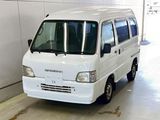
Ref# UW-mugnhrq0f2v8
DIYATA JAPAN CO.,LTD
2002 Subaru Samba Van GD-TV1
- Mileage
- 74,000 km
- Year
- 2002/1
- Engine
- 660cc
- Trans.
- Automanual
FOBPrice$2,300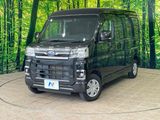
Ref# UW-mvehfi1efgcv
INSPIRE LLC
2023 Subaru Samba Van 3BD-S700B
Dias
- Mileage
- 49,000 km
- Year
- 2023/1
- Engine
- 658cc
- Trans.
- CVT
FOBPrice$10,174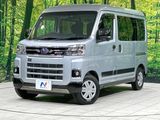
Ref# UW-mv06yt8huozp
INSPIRE LLC
2023 Subaru Samba Van 3BD-S700B
Dias
- Mileage
- 17,005 km
- Year
- 2023/4
- Engine
- 658cc
- Trans.
- CVT
FOBPrice$10,485 SOLD OUT
Ref# UW-6aacadc6c2663
MaccaLi inc
2019 Subaru Samba Van EBD-S331B
VBスマートアシスト
- Mileage
- 36,760 km
- Year
- 2019/12
- Engine
- 658cc
- Trans.
- AT
FOBPrice$5,314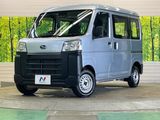 SOLD OUT
Ref# UW-6a506489ea3fe
INSPIRE LLC
2023 Subaru Samba Van 3BD-S700B
VB
- Mileage
- 9,490 km
- Year
- 2023/3
- Engine
- 658cc
- Trans.
- Manual
FOBPrice$5,762 SOLD OUT
Ref# UW-6ab49662b9ee3
INSPIRE LLC
2023 Subaru Samba Van 3BD-S700B
VC
- Mileage
- 17,600 km
- Year
- 2023/5
- Engine
- 658cc
- Trans.
- CVT
FOBPrice$8,940


Subaru Sambar Van Purchase Guide
The Subaru Sambar Van is a Japanese kei commercial van that has been in production since 1961. The first through the sixth generations featured a rear-engine, rear-wheel drive (RR) layout and independent suspension on all four wheels. From the seventh generation onward, it became an OEM model of the Daihatsu Hijet Cargo, evolving into a configuration that emphasizes practicality and safety features.
First-generation Subaru Sambar Van (K161/K162, etc. / 1961–1966) - Early lightweight van utilizing technology from the Subaru 360.

The charm of the first-generation Subaru Sambar Van.
A unique design featuring an RR layout and independent suspension.
The first generation is a light commercial vehicle developed by combining the powertrain and suspension of the iconic Subaru 360, which supported the dawn of Japan's national car era, with an original ladder frame. It adopted a rear-engine, rear-wheel-drive (RR) layout, distinguishing it from typical cab-over vehicles that place the engine under the front seats. Without an engine under the front seats, it offered greater flexibility in utilizing the space from the cabin to the front of the cargo area. It also featured independent four-wheel suspension, providing a distinctive ride quality for light commercial vehicles of its time. Internationally, this generation is viewed not so much as a practical vehicle, but rather as a collector's car symbolizing the early days of motorization in Japan.
Disadvantages of the first-generation Subaru Sambar Van.
There are significant constraints for use in today's transportation environment.
The first generation is equipped with a 360cc air-cooled two-stroke engine, resulting in significantly different acceleration and cruising performance compared to modern kei vans. This is not a vehicle suitable for highway driving or long-distance travel. Given the considerable time since its production, it is essential to check for body corrosion, as well as the condition of the fuel system, ignition system, brakes, and rubber components. Acquiring genuine parts is also challenging, and repairs may require used or custom-made parts. When exporting, it's advisable to verify whether it can be serviced with a two-stroke engine locally.
Rivals of the first-generation Subaru Sambar Van.
Kurogane Baby
As a contemporary comparison, the Kurogane Baby, a light commercial vehicle, can be mentioned. Both are among Japan's early light commercial vehicles, but the first-generation Sambar is characterized by its RR layout derived from the Subaru 360 and its independent suspension. The Sambar has a clear connection to its historical models, making it a valuable collector's item that symbolizes Subaru's history. On the other hand, for practical purposes, both vehicles have significant limitations regarding parts supply and performance, so it's important to prioritize the restoration environment over the purchase price when making a decision.
Specifications of the first-generation Subaru Sambar Van.
Engine: 360cc air-cooled, 2-stroke, inline 2-cylinder Transmission: Manual Drivetrain: Rear-wheel drive Suspension (Front): Independent Suspension (Rear): Independent Dimensions (L x W x H): Varies by model year and body specifications; please check the vehicle registration or contemporary catalog. Features: The first-generation model that adopts mechanisms derived from the Subaru 360. The K151 is classified as a truck type, while the K161/K162 are considered van types.
Second generation Subaru Sambar Van (K163/K64 and others / 1966–1973) - The new Sambar with enhanced practicality and safety.

The appeal of the second-generation Subaru Sambar Van.
Improving usability while retaining the basic structure of the first generation.
The second generation inherited the characteristics of the first generation, such as the RR layout and independent suspension, while improving the exterior, interior, and handling. In addition to the K163 series that debuted, the K64 series vans with updated exterior and engine were introduced around 1970. The later models featured a conventional front-hinged front door, enhancing usability for everyday use. It is not as primitive as the first generation, yet not as large as the third generation and beyond, making it suitable for collectors who wish to experience the charm of the 360cc era Sambar.
Drawbacks of the second-generation Subaru Sambar Van.
Even within the same generation, the specifications differ between the early and late models.
The second generation underwent many changes during its production period, with differences in appearance, door structure, engine, and operation systems between the early K163 series and the later K64 series. Simply ordering parts by the vehicle name may lead to incompatibility, so it is crucial to confirm the chassis number and the specifications of the actual vehicle. Being a 360cc two-stroke vehicle, the oil supply system for the fuel and the condition of the ignition system are also important. White smoke and engine noise alone cannot immediately indicate an issue, but it is safer to check for compression, starting ability, unusual noises, and oil leaks at a specialty shop.
Competitors of the second-generation Subaru Sambar Van
Daihatsu Hijet Van
A typical comparison is the contemporary Daihatsu Hijet Van. The Hijet has continuously evolved as a lightweight commercial vehicle, and depending on the specifications and time period, it may be easier to find parts information than for the Sambar. On the other hand, the second-generation Sambar is appealing for its unique design based on rear-engine/rear-wheel drive layout and the mechanical characteristics typical of Subaru's early light vehicles. If practicality and ease of repair are priorities, the Hijet is the choice; if rarity and structural uniqueness are valued, then the Sambar becomes the option.
Specifications of the second-generation Subaru Sambar Van.
Engine: 360cc Air-cooled 2-stroke Inline Twin Transmission: Manual Drive Type: Rear Wheel Drive Suspension (Front): Independent Suspension (Rear): Independent Dimensions (L×W×H): Varies by model year and body specifications; please refer to the vehicle registration or contemporary catalog for confirmation. Features: The early K163 series differs in appearance and mechanics from the K64 series that appeared around 1970. The K153/K154 and K55 are truck-type models.
Third-generation Subaru Sambar Van (K81/K85/K87, etc. / 1973–1982) – a long-selling generation that experienced expanded displacement and the addition of 4WD.

The charm of the third-generation Subaru Sambar Van.
A transitional model that evolved from 360cc to 550cc.
The third generation expanded its engine displacement to 360cc, 500cc, and 550cc in line with changes in the kei car regulations. It featured a transition from air-cooled to water-cooled engines and inclined rear engines to lower the height of the cargo area. Typical models in the van category include K81, K85, and K87, with variations in engine and body specifications depending on the year. In the later years, 4WD options were added, broadening the applications where the Sambar excels, such as agriculture, delivery, and operations in snowy regions. This generation connects the small body of the 360cc era with the more practical kei vans that followed, making it an intriguing option for overseas collectors seeking old-standard kei commercial vehicles.
Disadvantages of the third-generation Subaru Sambar Van.
We cannot determine the specifications without checking the engine displacement and model year.
The sales period is lengthy, and factors such as engine displacement, cooling method, and the presence of 4WD can change over time. Even within the same third generation, driving performance and parts compatibility are not uniform. Please check not only the model numbers like K81, K85, and K87 but also the chassis number, manufacturing year, and engine type. Many vehicles have been heavily used as commercial vehicles, so caution is warranted regarding corrosion in areas such as the cargo floor, side sills, front panels, and suspension mounting points. Even if the exterior looks clean, there may be repair traces hidden beneath the paint.
Competitors of the third-generation Subaru Sambar Van
Suzuki Carry Van
A typical comparison from the same era is the Suzuki Carry Van. The Carry has the advantage of high availability, making it easier to find used parts and maintenance information in certain regions. The Sambar maintains a rear-engine rear-wheel drive layout and independent suspension, providing a unique stability and ride quality even when unloaded. On the other hand, if there are no nearby repair shops that understand the Sambar's special structure, the more conventional Carry may be easier to maintain.
Specs of the 3rd Generation Subaru Sambar Van
Engine: Inline 2-cylinder, available in 360cc, 500cc, or 550cc. Depending on the year, it can be 2-stroke or 4-stroke. Transmission: Manual Drive Type: Rear-wheel drive, with 4WD available in later models Front Suspension: Independent suspension Rear Suspension: Independent suspension Dimensions (L x W x H): Varies depending on displacement classification, model year, and roof configuration, so individual confirmation is required. Features: Models such as K71/K75/K77 can be categorized as truck-type, while K81/K85/K87 can be categorized as van-type. Later models include 550cc and 4WD vehicles.
Fourth generation Subaru Sambar Van (KR1/KR2, etc. / 1982–1990) - A generation that enhanced practicality with a 550cc engine and optional 4WD.

The appeal of the fourth-generation Subaru Sambar Van.
A lightweight van combining RR and 4WD for work.
The fourth generation enhanced the commercial vehicle's overall performance by combining a 550cc engine with a larger cargo space. It included the 2WD KR1 and the 4WD KR2, as well as the upgraded KR5 and KR6 models introduced later. One distinctive feature of the Sambar is that the engine is positioned at the rear, reducing the transmission of engine heat and noise to the driver's area. The 4WD vehicles excelled on snowy roads, unpaved paths, and farmlands. Additionally, the 4WD model's transmission offered a unique advantage with a 5-speed (4-speed + EL) configuration featuring "EL (Extra Low)" for extremely low-speed driving on steep slopes and rough terrain.
Disadvantages of the 4th generation Subaru Sambar Van
The unique performance and parts supply constraints of 550cc vehicles.
The fourth generation model complies with the 550cc standard, and compared to the subsequent fifth generation, which increased to 660cc, it has limited performance for high-speed cruising and carrying capacity. For 4WD vehicles, please check for unusual noises in the drivetrain, the operation of the sub-transmission and switching mechanism, and the condition of the drive shaft boots. Since the engine specifications differ between KR1/KR2 and KR5/KR6, it is also important to verify the compatibility of replacement parts. There are also passenger and leisure-oriented versions like the Sambar Try, but they differ in interior, seating capacity, and equipment from commercial vans.
Rivals of the 4th generation Subaru Sambar Van.
Honda Acty Van
A typical rival is the Honda Acty Van. The Acty features a different powertrain layout compared to other light vans, as it places the engine towards the rear rather than under the front seats. The Sambar has a rear-engine, rear-wheel-drive configuration with independent suspension, while the Acty has a midship layout. If you're looking for a unique driving experience and structural characteristics when empty, the Sambar is appealing. However, both vehicles are considered classic cars, and it's important to prioritize the individual condition of the vehicle over general reputation.
Specifications of the 4th Generation Subaru Sambar Van.
Engine: 544cc Inline 2-cylinder 4-stroke Transmission: 4-speed MT or 5-speed MT (4WD version features "4-speed + EL"), Auto clutch Drivetrain: RR or 4WD Suspension (Front): Independent Suspension (Rear): Independent Dimensions (L x W x H): Standard dimensions within the light vehicle category. Please confirm on the vehicle registration document as it varies by roof and grade. Features: KR1/KR5 are 2WD, KR2/KR6 are 4WD. KR5/KR6 can be categorized as later models equipped with 3-valve engines.
Fifth generation Subaru Sambar Van (KV3/KV4, etc. / 1990–1999) - A unique mini van equipped with a 660cc inline 4-cylinder engine.

The charm of the 5th generation Subaru Sambar Van.
Smooth 4-cylinder engine and RR layout.
The fifth generation is a 660cc model that complies with the new kei car regulations. The representative models in the van category are the 2WD KV3 and the 4WD KV4, both equipped with Subaru's unique EN07 4-cylinder engine. Unlike many contemporary kei vans that have 3-cylinder engines, this model features the relatively smooth rotational feel characteristic of a 4-cylinder engine. All variants come with ventilated disc brakes in the front, and buyers could choose between two types of 4WD: part-time and viscous coupling full-time 4WD. The RR layout and four-wheel independent suspension have also been retained, making it popular not only as a delivery vehicle but also as a base for camping models and hobbyist JDM vans.
Disadvantages of the 5th generation Subaru Sambar Van.
I want to avoid the early model CVT cars and prefer to choose manual or later model AT vehicles.
The fifth generation offers a variant equipped with an "ECVT," a continuously variable transmission that uses an electromagnetic powder clutch. However, this early model ECVT has been plagued by issues related to aging and wear, making parts and repairs extremely difficult to obtain today. Therefore, if ease of maintenance is the top priority, the 5-speed manual transmission (MT) or the later model 3-speed automatic transmission (AT) introduced after 1995, which significantly improved reliability, are strongly recommended. Additionally, for supercharged models, it is important to inspect not only the supercharger itself but also the intake piping, cooling system, and oil management condition. Many vehicles have high mileage due to commercial use, so it is essential to comprehensively check for issues such as engine oil leaks, coolant leaks, unusual noises in the drive system, and corrosion of the cargo floor.
Rivals of the 5th generation Subaru Sambar Van.
Suzuki Every
A typical competitor is the Suzuki Every. The Every generally has a relatively high availability of used cars and parts, and it may be easier to obtain maintenance information overseas. The reason to choose the 5th generation Sambar is its unique combination of a 4-cylinder engine, rear-engine layout, and independent suspension. If you prioritize ease of maintenance as a typical kei van, the Every is the better choice, whereas if you value driving feel and mechanical uniqueness, the Sambar is more suitable.
Specifications of the 5th generation Subaru Sambar Van.
Engine: 658cc EN07 type, inline 4-cylinder. Naturally aspirated or supercharged Transmission: 5-speed MT, ECVT, 3-speed AT (later models), etc. Drive system: RR or 4WD Suspension (front): Strut type independent suspension Suspension (rear): Independent suspension Dimensions (L×W×H): Approximately 3,295×1,395×1,800mm, varies by grade and roof specifications Features: KV3 is 2WD, KV4 is 4WD. In addition to commercial vans, there are also passenger and leisure-oriented models like Dias and Classic series.
6th generation Subaru Sambar Van (TV1/TV2 and others / 1999–2012) - The final generation that became the completed form of Subaru's in-house production.

The charm of the sixth generation Subaru Sambar Van.
Continuing to the end with a 4-cylinder, rear-engine, and four-wheel independent suspension.
The sixth generation is a model designed to comply with the new vehicle dimension regulations for kei cars established in 1998. The representative types for commercial vans are the 2WD TV1 and the 4WD TV2, which inherit the EN07 four-cylinder engine, rear-engine layout, and independent four-wheel suspension. Its appeal lies in the spacious cargo area, streamlined body design, the structural configuration around the front seats due to the rear engine, and the supercharger option. Being the last Sambar developed and produced by Subaru, it has garnered interest not only from enthusiasts in Japan but also from JDM fans overseas. In-house production ended in February 2012.
Drawbacks of the 6th generation Subaru Sambar Van.
Check for corrosion and maintenance condition, not just popularity.
In the used car market, prices for the last model of the Subaru Sambar may increase, but not all units are in good condition. There are vehicles that have been driven long distances as commercial vehicles, as well as delivery vans that have experienced frequent short-distance driving and stops. Check for corrosion around the frame, suspension mounting points, under the sliding doors, and the cargo floor. For the engine, it's important to check for oil leaks, the cooling system, the timing belt replacement history, and the condition of the supercharger. For automatic transmission vehicles, also verify the shift shock and fluid management.
Competitors of the 6th generation Subaru Sambar Van.
Honda Acty Van
A typical comparison model is the Honda Acty Van. Both vehicles adopt designs that differ from the conventional front-engine light vans. The Acty features a mid-engine layout, while the Sambar utilizes a rear-engine, rear-wheel drive configuration. The Sambar's appeal lies in its four-cylinder engine, independent four-wheel suspension, and supercharger option. On the other hand, the Acty is also renowned for its durability and load-carrying capabilities. When purchasing, it is important to compare factors such as rust, accident history, maintenance records, and usage history rather than just the model name.
Specifications of the 6th generation Subaru Sambar Van.
Engine: 658cc EN07 type inline 4-cylinder. Naturally aspirated or supercharged Transmission: 5-speed MT, 3-speed AT, etc. Drive System: RR or 4WD Suspension (Front): Strut-type independent suspension Suspension (Rear): Independent suspension Dimensions (Length x Width x Height): Approximately 3,395 x 1,475 x 1,900 mm, varies by grade Features: TV1 is 2WD, TV2 is 4WD. There are passenger versions such as the TW1/TW2 type Dias Wagon.
7th generation Subaru Sambar Van (S321B/S331B / 2012–2021) - A practical generation transitioned to OEM Daihatsu Hijet Cargo.

The appeal of the 7th generation Subaru Sambar Van.
A light van base with excellent parts distribution and maintainability.
Starting from the seventh generation, it has become an OEM vehicle based on the Daihatsu Hijet Cargo. The Subaru-produced four-cylinder engine, rear-engine layout, and independent rear suspension have been discontinued, replaced by a more conventional layout with the engine positioned in the front and rear-wheel drive. While it has lost some of its uniqueness, a key advantage is that it shares basic components with the Hijet Cargo, making it easier to find consumables and used parts. This could make it more feasible to maintain as a commercial vehicle overseas compared to the older Subaru models.
Disadvantages of the 7th generation Subaru Sambar Van.
The old Sambar differs in both structure and driving feel.
The 7th generation uses the Sambar name, but there is no design connection with the previous 6 generations. If you expect the old 4-cylinder engine and RR layout, you will notice a significant difference in character. For used cars, please check for high mileage due to delivery services, wear on the sliding doors, damage to the cargo area, and the condition of the automatic transmission. Since the engine is located near the front seats, the condition of the heat insulation and around the seats is also important. For 4WD vehicles, check for abnormal noises from the propeller shaft and differential.
Competitors of the 7th generation Subaru Sambar Van
Daihatsu Hijet Cargo
The most direct comparison is with the OEM-derived Daihatsu Hijet Cargo. Since the engine, platform, and basic body structure are common, the main selection criteria will be the vehicle's condition, equipment, selling price, and brand recognition in the local market. The mechanical advantages of choosing the Sambar are limited, but it can be a strong option if a vehicle managed by a Subaru dealership is found or if a desired specification is available in stock. When searching for parts, checking not only the model number of the Sambar but also the corresponding model year of the Hijet Cargo can make the search easier.
Specifications of the 7th generation Subaru Sambar Van.
Engine: 658cc KF type inline 3-cylinder. Naturally aspirated or turbocharged. Transmission: 5-speed manual or 4-speed automatic. Drive system: FR or 4WD. Suspension (front): MacPherson strut type. Suspension (rear): Trailing link axle type. Dimensions: Approximately 3,395 × 1,475 × 1,875 mm. Varies by roof and grade. Features: The S321B is 2WD, while the S331B is 4WD. It is an OEM vehicle of the Daihatsu Hijet Cargo and has a fundamentally different structure from the Subaru Sambar up to the sixth generation.
8th generation Subaru Sambar Van (S700B/S710B / 2022–) - The current light van that has evolved with enhanced safety features and load capacity.

The charm of the 8th generation Subaru Sambar Van.
A modern commercial vehicle featuring CVT and advanced driving assistance systems.
The 8th generation is an OEM model based on the current Daihatsu Hijet Cargo. Improvements have been made in body rigidity, cargo space usability, and driving assistance features, enhancing its ease of use as a commercial vehicle. The CVT model offers smooth shifting, making it suitable for urban deliveries and congested environments. Depending on the grade, options for turbo engines and Smart Assist are also available. This generation is an attractive choice for buyers looking to use a relatively new light van as a practical vehicle overseas, particularly in terms of safety and parts availability.
Drawbacks of the 8th generation Subaru Sambar Van.
I would like to confirm the electronic equipment and the maintenance support from the importing country.
The current model has increased safety features and electronic controls, so it is necessary to check whether the cameras, sensors, and control systems have been properly restored on accident-repaired vehicles. If there has been a replacement of the windshield or bumper, also verify the adjustment history of the driver assistance systems. Additionally, since it is designed according to Japan's unique kei car regulations, it may not comply with collision safety standards, exhaust emission regulations, or registration classifications in the importing country. It is important to confirm the local import conditions and whether there is an environment capable of servicing CVTs and electronic control systems before making a purchase.
Rivals of the 8th generation Subaru Sambar Van.
Daihatsu Hijet Cargo
The most direct rival of the eighth generation is the Daihatsu Hijet Cargo, which is the OEM source. Since they share the same basic structure and major mechanical components, you will need to compare prices, equipment, body colors, and maintenance history from dealerships to make a choice. The Sambar features exterior parts and emblems specific to the Subaru brand, but there is no significant difference in driving performance. When sourcing parts after export, it is useful to check the model and production period of the S700B/S710B alongside the corresponding Hijet Cargo.
Specifications of the 8th generation Subaru Sambar Van.
Engine: 658cc KF type inline 3-cylinder. Naturally aspirated or turbocharged Transmission: 5-speed manual or CVT. Configuration varies by grade and model year Drivetrain: FR or 4WD Suspension (Front): MacPherson strut Suspension (Rear): Trailing link axle Dimensions: Basic dimensions are 3,395 × 1,475 × 1,890 mm, varying by specifications Features: The S700B is 2WD, while the S710B is 4WD. It is an OEM vehicle of the Daihatsu Hijet Cargo, a modern light commercial van equipped with Smart Assist and CVT.