


Used Mazda Scrum Truck for Sale
Set your destination to see the total price including shipping (C&F).
2 Results


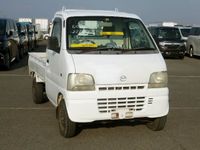
Ref# UW-68ba4556e37e2
DIYATA JAPAN CO.,LTD
2000 Mazda Scrum Truck DB52T
350kg
- Mileage
- 120,600 km
- Year
- 2000
- Engine
- 660cc
- Trans.
- Automatic
FOB$1,800
Ref# UW-68ba4556e37e2
DIYATA JAPAN CO.,LTD
2000 Mazda Scrum Truck DB52T
350kg
- Mileage
- 120,600 km
- Year
- 2000
- Engine
- 660cc
- Trans.
- Automatic
Price$1,800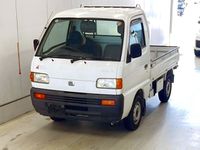 SOLD OUT
Ref# UW-mt2sii860t06
DIYATA JAPAN CO.,LTD
1995 Mazda Scrum Truck V-DK51T
350kg 4WD
- Mileage
- 23,500 km
- Year
- 1995
- Engine
- 660cc
- Trans.
- Manual
FOB$2,400 SOLD OUT
Ref# UW-mt2sii860t06
DIYATA JAPAN CO.,LTD
1995 Mazda Scrum Truck V-DK51T
350kg 4WD
- Mileage
- 23,500 km
- Year
- 1995
- Engine
- 660cc
- Trans.
- Manual
Price$2,400


Mazda Scrum Truck Buying Guide

The Mazda Scrum Truck is an OEM kei truck(mini truck) based on the Suzuki Carry. While there used to be a Mazda original light commercial vehicle series called Porter, it has been replaced with Suzuki models under the Scrum series. In Japan, it is used in agriculture, delivery services, facilities management, and individual retail stores, and it is also in demand in the overseas used car market as a compact and easy-to-handle work vehicle. The initial model launched in 1989 was sold under the "Autozam" brand, but for the purpose of this guide, we will unify and explain it as "Mazda Scrum Truck First Generation" from the perspective of parts compatibility.
First-generation Mazda Scrum Truck (DG41T/DH41T, DG51T/DH51T / 1989–1991) - The initial model retains the rustic charm typical of a light commercial vehicle.

The Appeal of the First Generation Mazda Scrum Truck
Small size and easy handling typical of an old-style mini truck
The charm of the first-generation Scrum Truck lies in its easy handling, even more compact than current kei trucks(mini trucks), characteristic of older standard light vehicles. The small size of the vehicle directly translates to ease of use in narrow farm roads, warehouses, movement within premises, and short-distance deliveries. Its structure is simple, with minimal electronic control, making it an easy-to-handle vehicle in environments accustomed to older light commercial vehicles. Whether you're searching for it overseas for hobby, farm use, or onsite operations, its rustic atmosphere, absent in modern cars, adds to its appeal. Since more than 25 years have passed since its manufacture, it has cleared the American import regulations (the 25-year rule), enabling smooth export to the North American market. *Note regarding the image: This is the 8th generation Suzuki Carry (later model), an original equipment manufacturer (OEM). The emblems and detailed specifications are different from those of the Scrum Truck (Photo: Suzuki).
Drawbacks of the First Generation Mazda Scrum Truck
Concerns about rust, parts, and comfort due to age
Since the first generation model has been around for a long time, checking the condition of the vehicle is more important than the model year when purchasing. Particular attention should be paid to rust on the truck bed, the area around the frame, the lower part of the cabin, and the wheel assembly. Many vehicles have been heavily used as commercial vehicles, and even if the mileage is low, deterioration will progress if they are stored in poor conditions. It's hard to compare the comfort and safety features with modern kei trucks(mini trucks), and they're not designed for long distances or high-speed driving. There is also a difference in the availability of parts depending on the vehicle and the area, so it's a generation you'll want to check whether maintenance can be done in the export destination.
Rivals of the first-generation Mazda Scrum Truck
Honda Acty Truck
A typical comparison for the first-generation Scrum Truck is the Honda Acty Truck, which was popular during the same era. The Acty has a mid-ship (MR) structure, positioning the engine towards the middle rear of the vehicle and driving the rear wheels. This ensures a solid traction on the drive wheels (rear heavy) even when no load is carried. Therefore, it has a great track record for traversing on agricultural roads and rough terrains. In contrast, the Scrum (Carry series) features an orthodox structure with the engine located beneath the front seats, boasting strengths in living space at your feet and ease of maintenance due to its simplicity. If you're comparing in international markets or choosing a used car, the Acty could be a prominent choice if you prioritize off-road performance and unique mechanisms. If the ease of obtaining parts and a reliable maintenance environment are your top priority, the Scrum becomes a strong candidate.
Specifications of the First Generation Mazda Scrum Truck
・Engine: 550cc/660cc Gasoline (Suzuki F5B/F6A model) ・Transmission: Mainly MT, with AT available depending on specifications ・Drive system: 2WD/4WD ・Front suspension: MacPherson Strut Coil Spring ・Rear suspension: Axle Semi-Elliptical Leaf Spring ・Length × width × height: Approximately 3,195〜3,295×1,395×1,765mm ・Characteristics: It is an OEM model of the Suzuki Carry series. The body is even smaller than the current kei trucks(mini trucks), and the interior and loading feel is simple, but it has an outstanding ease of maneuverability.
Second Generation Mazda Scrum Truck (DJ51T/DK51T etc. / 1991–1998) - A practical kei truck(mini truck) for work in the 1990s.

The Charm of the Second-Generation Mazda Scrum Truck
Balanced and practical for daily operations
The second generation Scrum Truck is a true representation of Japanese light commercial vehicles of the 1990s, adapting to a wide range of applications such as farming, delivery, equipment industry, and store use. It typically emphasizes usability as a used vehicle more than the first generation, positioning it between a classic car and a business vehicle. If it's a 4WD vehicle, it's easy to use even in areas with many unpaved roads and snowy roads, making it an attractive model for consideration as a work vehicle in small farms or mountainous areas overseas. The relatively simple structure is also a hallmark appeal of the mini-truck. More than 25 years have passed since its manufacture, thus it clears the U.S. import regulation (25-year rule), enabling smooth exportation to the North American market. *Note regarding the image: This is the 9th generation Suzuki Carry, which is the original equipment manufacturer (OEM). The emblem and detailed specifications differ from the Scrum Truck (Photo: Suzuki).
Drawbacks of the Second Generation Mazda Scrum Truck
The condition of the vehicle varies greatly, and choosing only based on price often leads to disappointment.
Many second-generation models have been extensively used as utility vehicles, making it difficult to judge based on exterior condition alone. It's important to check for scratches on the loading deck, rust, underbody corrosion, clutch wear, and the condition of the 4WD mechanism. The presence of air conditioning and power steering varies by model, and if comfort abroad is paramount, verifying these features is essential. It's also important to confirm whether it comes with a "4-speed MT" which isn't suitable for high-speed driving, or the more sought-after "5-speed MT". For models with air conditioning, some, depending on the year, may use old coolant (R12), so attention to the type of gas is also necessary. Since kei trucks(mini trucks) are often used for short distances, mileage alone may not accurately indicate wear and tear. For cheaper models, it's particularly important to meticulously review the maintenance and repair history.
Rivals of the Second Generation Mazda Scrum Truck
Mitsubishi Minicab Truck
The Mitsubishi Minicab Truck of the same period can be considered a comparable model to the second generation Scrum Truck. Both are practical vehicles widely used in the Japanese light commercial vehicle market. The Scrum is an easy choice in areas where Suzuki parts and maintenance information are compatible. On the other hand, the Minicab is common in some areas and can be beneficial in terms of price and condition. For foreign buyers, it's easier to choose by comparing not only the brand name but also the availability of parts at the destination, experience in maintenance, and the necessity of 4WD.
Specifications of the 2nd Generation Mazda Scrum Truck
・Engine: 660cc Gasoline (Suzuki F6A model) ・Transmission: Mainly MT, with AT options depending on specifications ・Drive system: 2WD/4WD ・Front Suspension: MacPherson strut coil spring ・Rear Suspension: Rigid axle semi-elliptical leaf spring ・Length×Width×Height: approximately 3,295×1,395×1,715 to 1,765mm ・Features: It represents the practical generation of mini trucks from the 1990s. The level of comfort features varies depending on the year and grade, and the presence or absence of air conditioning and power steering needs to be confirmed for each vehicle.
3rd Generation Mazda Scrum Truck (DG52T/DH52T, DG62T, DG63T / 1999–2013) - The core generation exquisite in balancing circulation volume and practicality.

The Appeal of the 3rd Generation Mazda Scrum Truck
Easy-to-choose used cars for practical generations
The third-generation Scrum Truck, which has been on the market since 1999, is a relatively easy to find model in the used car market. It has solid basic performance as a mini-truck, making it versatile for a variety of purposes such as agriculture, construction, delivery, and on-site work. It's easier to use in daily life than older generations and easier to keep the price down than current models, which adds to its appeal. For international sales, a major advantage is that you can directly use parts and maintenance information from the base vehicle, the Carry. If you're choosing the Scrum Truck for practical purposes, this generation should be the first you consider. Early models like the 1999 version are now gradually meeting the 25-year rule in the United States, making them a point of focus as a potential export demand in the future.
Disadvantages of the third-generation Mazda Scrum Truck
The model year range is wide, with different impressions for the early and late periods.
The third generation has a long sales period, so specifications and conditions can vary greatly depending on the year. Early models have already experienced significant aging, making it crucial to check for rust, condition of rubber parts, suspension, and drivetrain. Late models (newer models) are easier to use, but some have been heavily used as commercial vehicles. The DG63T series is common in the used car market, but the cheaper the vehicle, the more carefully you should check the condition of the loading area and undercarriage. While 4WD vehicles are convenient, they might have been used on rough roads or snowy streets, so it's indispensable to check for any unusual noises in the drivetrain and to verify its operation.
Rivals of the third-generation Mazda Scrum Truck
Daihatsu Hijet Truck
The main rival of the third-generation Scrum Truck is the Daihatsu Hijet Truck. The Hijet is very well-known in Japan's kei truck(mini truck) market and there are areas overseas where it is easy to find. The Scrum truck is an OEM of the Suzuki Carry series, and it can be advantageous in regions where the Carry series' parts and maintenance are readily available. When comparing, it's more important to consider the condition of the car, rusting, presence of air conditioning, whether it's 2WD or 4WD, and the availability of parts locally, rather than just the brand name. As a utility vehicle, the most crucial factor is to choose a unit that's in good condition.
Specifications of the third-generation Mazda Scrum Truck
・Engine: 660cc Gasoline (Suzuki F6A/K6A) ・Transmission: Mainly MT, with AT available depending on specifications ・Drive System: 2WD/4WD ・Front Suspension: MacPherson Strut Coil Spring ・Rear Suspension: Leaf Spring ・Length x Width x Height: Approximately 3,395 x 1,475 x 1,790~1,810mm ・Features: This model includes long-term selling generations like DG52T/DH52T, DG62T, DG63T, etc. Specifications may vary depending on the year of manufacture. It's important to check comfort features, drive system, and usage history.
4th Generation Mazda Scrum Truck (DG16T / From September 2013 to present) - The current generation, honed for practicality as a modern kei truck(mini truck).

The Appeal of the 4th Generation Mazda Scrum Truck
Highly functional for modern work vehicles
The fourth-generation Scrum Truck, which has been on sale since September 2013, is the current generation offering increased ease of use as a kei truck(mini truck) and enhanced everyday usability. Compared to older generations, comfort and handling have improved, making it a good choice for daily work use. While it tends to be pricier as a used vehicle, the ability to choose a newer model is a significant advantage. For overseas buyers, it's not only an option for agricultural, delivery, or small business use, but also a choice when seeking well-conditioned, Japanese-made kei trucks(mini trucks).
Disadvantages of the 4th Generation Mazda Scrum Truck
It's necessary to discern the difference in price and equipment.
The 4th generation, being newer, tends to have higher used car prices than older models. If cost is your top priority, the 3rd generation may be a more likely candidate. However, if you plan to use it for a long time, the good condition of the 4th generation can be attractive. When purchasing, you’ll want to check the equipment differences based on the grade and specifications. The presence or absence of air conditioning, power steering, automatic transmission, and four-wheel drive will directly impact its use. As it's a commercial vehicle, even newer models may have scratches on the cargo bed, rust on the undercarriage, signs of overloading, and a history of use in agriculture, all of which need to be checked. The local parts supply system is another point to consider.
Rivals of the 4th Generation Mazda Scrum Truck
Daihatsu Hijet Truck
The fourth-generation Scrum Truck's most direct rival is Daihatsu's Hijet Truck, which is always competing for the top spot in Japan's kei truck(mini truck) market. The Hijet boasts a high share due to its advanced safety driving support system (Smart Assist), a wide range of colors, and the comfort of its Jumbo (extended cabin) specification, making it as easy to handle as passenger cars. On the other hand, the fourth-generation Scrum's strengths are its powerful driving performance thanks to its base model Suzuki Carry's 'R06A engine', and the longest cargo bed floor in its class. Although Hijet has the upper hand in terms of brand power and distribution in many regions, the Scrum offers specs that are as modern and easy to use, with the added advantage of being relatively affordable and easy to find in the used car market.
Specs of the 4th Generation Mazda Scrum Truck
・Engine: 660cc Gasoline (Suzuki R06A type) ・Transmission: MT / AT, varies based on model year and specs ・Drive System: 2WD / 4WD ・Front Suspension: MacPherson strut type ・Rear Suspension: Leaf type ・Length×Width×Height: Approximately 3,395×1,475×1,765mm ・Features: This is the current generation OEM from Suzuki's Carry series. It's more practical and comfortable than the previous generations, making it an ideal choice for overseas buyers who will use it for work purposes over a long period of time.