


Used Honda Street for Sale — 1 listed
Set your destination to see the total price including shipping (C&F).
1 Results
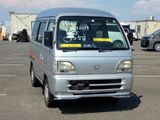 SOLD OUT
Ref# UW-ms4d7urty222
DIYATA JAPAN CO.,LTD
1998 Honda Street V-HH3
- Mileage
- 105,000 km
- Year
- 1998
- Engine
- 660cc
- Trans.
- Manual
FOBPrice$2,150

Honda Street Purchase Guide

The Honda Street is a light cab van modeled on the Acty, a light commercial vehicle, with an emphasis on passenger and leisure use. Although it is designed for commercial registration in Japan, it is characterized by the addition of passenger car-like elements to its interior and equipment. For overseas used car buyers, it offers the appeal of a distinctive JDM light van, with a compact body, midship rear-drive layout, and practical cargo space.
First Generation Honda Street (VD/VH model and others / 1981–1988) - Adding leisure to the practicality of Acty.

The Charm of the First-Generation Honda Street
A compact vehicle packed with both commercial and recreational features.
The first-generation Honda Street emerged as a more passenger-friendly version of the Acty Van. Its squared-off, compact van body is easy to maneuver through narrow lanes and small parking spaces, making it also user-friendly for loading goods. These sorts of wagons, unlike commercial vans bound by Japanese regulatory restrictions on rear-seat space, come with improved rear-passenger comfort. They were positioned as light vans that are handy not just for business uses, but also for hobbies and leisure. From an overseas perspective, a distinct charm resides within this generation due to its unpretentious design, right-hand drive - something signature to JDM, and the small body unique to Kei cars. Especially for those hunting for an old Japanese Kei van, the reasons may be that it keeps the practicality of Acty series while bearing modification towards a passenger vehicle. Moreover, the 4WD specification, added in 1983, adopted a groundbreaking mechanism known as "the world's first midship 4WD one-box" (and contrary to 2WD models with a horizontally-mounted engine, a new vertically-mounted engine layout was developed), which can strongly appeal to hardcore enthusiasts overseas owing to its high rarity value from a historical perspective of automobiles. *Note: The accompanying images are composed of official images of the first-generation Honda Street from different model years. The exterior and interior are from 1981, while the instrument panel image is from 1983. Specifics may vary by year and equipment specifications.
Drawbacks of the First-Generation Honda Street
You need to choose based on the premise of maintenance as a classic car.
As the first-generation Honda Street has already been out of production for a long time, it's crucial to treat it as a vintage car when purchasing. The underside of the body, floor, around the doors, area around the slide door, leaks, and interior degradation are aspects that definitely need inspection. The engine and drivetrain are relatively simple in structure, but depending on the year, hoses, rubber parts, the cooling system, ignition system, and brakes may require maintenance. Comfort and safety equipment are significantly different compared to modern cars, making this model more suitable for city driving, moving within a site, or short-distance travel, rather than long-distance highway drives. If you plan to export the car abroad, it is vital to check the availability of spare parts and whether the car can be serviced locally in advance.
The main competitor of the first-generation Honda Street
Suzuki Carry Van
The iconic rivalry of the original Honda Street lies with the contemporary Suzuki Carry Van. Both are representative of Japanese mini cab vans with their small bodies and spacious cargo compartments, built primarily for commercial use. The Carry Van has a relatively larger circulation in the market, making it easier to find parts and information. On the other hand, the Honda Street attracts with its typical midship-rear-drive Acty range character, as well as its Street-specific passenger-oriented features. If practicality is your sole emphasis, the Carry Van is a strong contender. However, if you value Honda-style mechanics or the slightly unique atmosphere of a rare JDM mini-van, the Street could be your pick.
Specifications of the First-Generation Honda Street
Engine: Water-cooled 4-cycle 2-cylinder OHC 545cc series Transmission: 2-speed AT (Hondamatic) / 4-speed MT / 5-speed MT Drive Method: Midship (MR). 4WD specification (part-time) also available since 1983 Front Suspension: MacPherson strut Rear Suspension: De Dion style Length x Width x Height: Approximately 3,195mm × 1,395mm × 1,745-1,895mm for representative early models. Varies depending on roof specifications. Features: Based on the Activan, this light cab van is designed for passenger and leisure use. Initially produced in the 550cc era, the condition of existing vehicles should be checked individually.
The 2nd Generation Honda Street (HH1/HH2-HH3/HH4 Model / Produced from 1988-1998) ~ A refined generation that featured enhanced comfort and 4WD capabilities.

The Charm of the Second Generation Honda Street
With its downsized 660cc engine, this model has become easier to handle, making it an attractive choice for export markets.
The second generation Honda Street debuted in 1988 with a full model change in the Acty/Street series. The early versions come in the 550cc range of HH1/HH2 models, transitioning to the 660cc HH3/HH4 models after 1990, in response to new regulations for light vehicles. There are many specimens that meet the year and import regulations sought after by overseas buyers, with a better balance of practicality and comfort than the first generation. With a 3-cylinder engine, 5-speed MT, 3-speed AT, real-time 4WD, etc., the choice of specifications tailored to the use is also a feature. It's a generation enjoyably versatile for both practical purposes and leisure, such as camping, hobby use mini vans, city driving, transporting light goods, and more.
Shortcomings of the Second Generation Honda Street
Differences exist depending on the model year and specifications, thus it is important to verify the model type and drive system.
The second generation Honda Street has been on sale for a long time, resulting in variation between early 550cc models and later 660cc models, 2WD and 4WD, manual and automatic transmission, and different grades. When purchasing, it's important not just to judge by the name "Street" but to check the model type, engine, drive system, and transmission listed on the vehicle inspection certificate. Additionally, when considering export to foreign countries, particularly taking into account the United States' "25 Year Rule," it is crucial to not only check the "Initial Registration Year" listed on the vehicle inspection certificate, but to also verify the "Exact Production Date" via the caution plate (stamp) located under the co-driver's seat. This is extremely important in ensuring smooth import customs clearance and preventing issues in the destination country. Specifically for 4WD vehicles, as some units may have been used in snowy or mountainous regions, you'll want to inspect the vehicle for rust under the carriage as well as the condition of the differential, drive shaft area, and boot components. While automatic models are easier to handle for city driving, they do have limitations in acceleration and cruising performance for older vans. Also, automatic transmission is not available for 4WD models of this generation of Street. If you're intending to use it overseas, it's less risky to choose based on whether it will be used for city driving, for transportation within farmland or premises, or for leisure.
Rival of the second-generation Honda Street
Subaru Sambar Van
The iconic rival of the second-generation Honda Street is the contemporary Subaru Sambar Van. The Sambar Van, with its rear-engine layout and unique driving dynamics, is popular and well-known in the overseas JDM minivan market. The Street is characterized by its mid-ship layout from Acty, practical cargo space, and relatively simple structure. The Sambar tends to be chosen for its fun and individuality, while the Street is chosen for its practicality and the balance of Honda-like design. As both are older models, it is crucial not only to consider the brand and appearance, but also to check the vehicle's maintenance history, rust condition, transmission status, and the availability of parts before making a decision.
Specifications of the Second-Generation Honda Street
Engine: Early models have water-cooled straight-three 550cc engines, while models from 1990 onwards maintain water-cooled straight-three 660cc E07A series Transmission: Options include 4-speed MT, 5-speed MT, and 3-speed AT. This varies depending on the model year, drive system, and grade. Drive System: Midship (MR), Real-time 4WD Front Suspension: MacPherson strut Rear Suspension: De Dion tube Length x Width x Height: Typical Street models from 1990 onwards are approximately 3,295mm x 1,395mm x 1,870-1,880mm. This varies depending on 2WD/4WD and the model year. Features: In 1988, the model transitioned to three cylinders and in 1990, it adopted the new 660cc standard (models HH1/HH2 have 550cc engines, while models HH3/HH4 have 660cc engines). Despite the production ending in 1998, the stock continued to be sold until 2001. In 1999, the successor Vamos was introduced. It's important to not just rely on the car's name or appearance, but to verify the model year with the chassis number and model number *About the successor model Afterward, in 1999, the second generation Vamos was introduced as the successor vehicle with a higher focus on passenger comfort. It is essentially the third generation of the Street, but it is not covered in this article.