Used 2025 Daihatsu Hijet Truck cars for sale

HiJet Truck Buying Guide
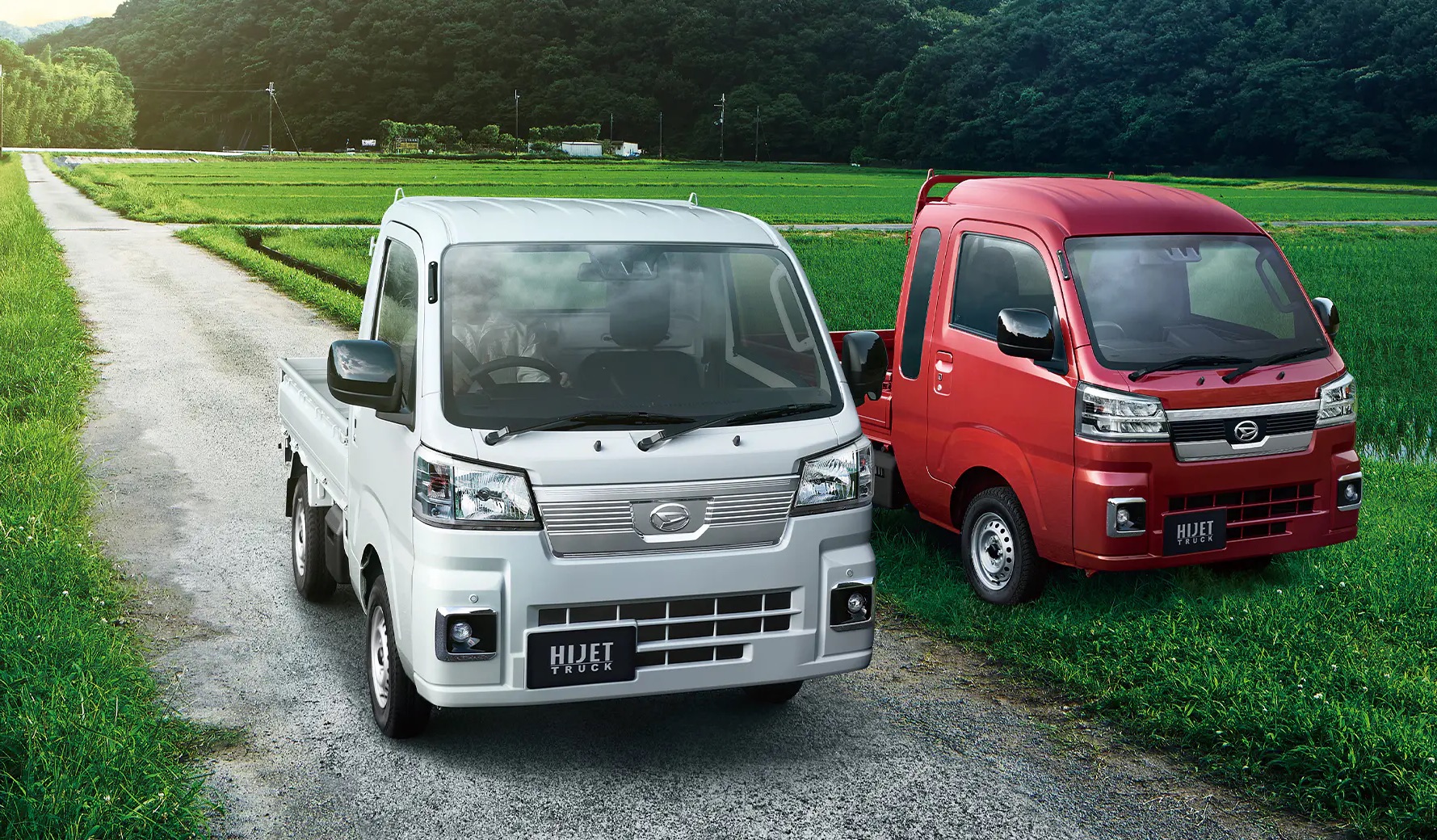
The Daihatsu Hi-Zet Truck is a standout in Japan for its "working mini truck" function, shoulder-to-shoulder with the Suzuki Carry. Perfectly poised to effortlessly navigate tight alleyways and fields, it boasts easy utility with a low floor and three-way open loading bed, combined with high durability. There's an extensive import history not only for domestic business use, but also in right-hand drive nations and those with a 25-year rule. Particularly the 8th generation (1994-1999) and 9th generation (1999-2014) models are abundant in the second-hand market, making parts and maintenance information readily available, adding to their charm. This article aims to thoughtfully explain the "attractions, disadvantages, rivals, and main specifications" of each generation, even for our overseas readers.
The 8th Generation Daihatsu Hijet Truck (S100P/S110P, 1994–1999) - The ultimate form of the old standard period.
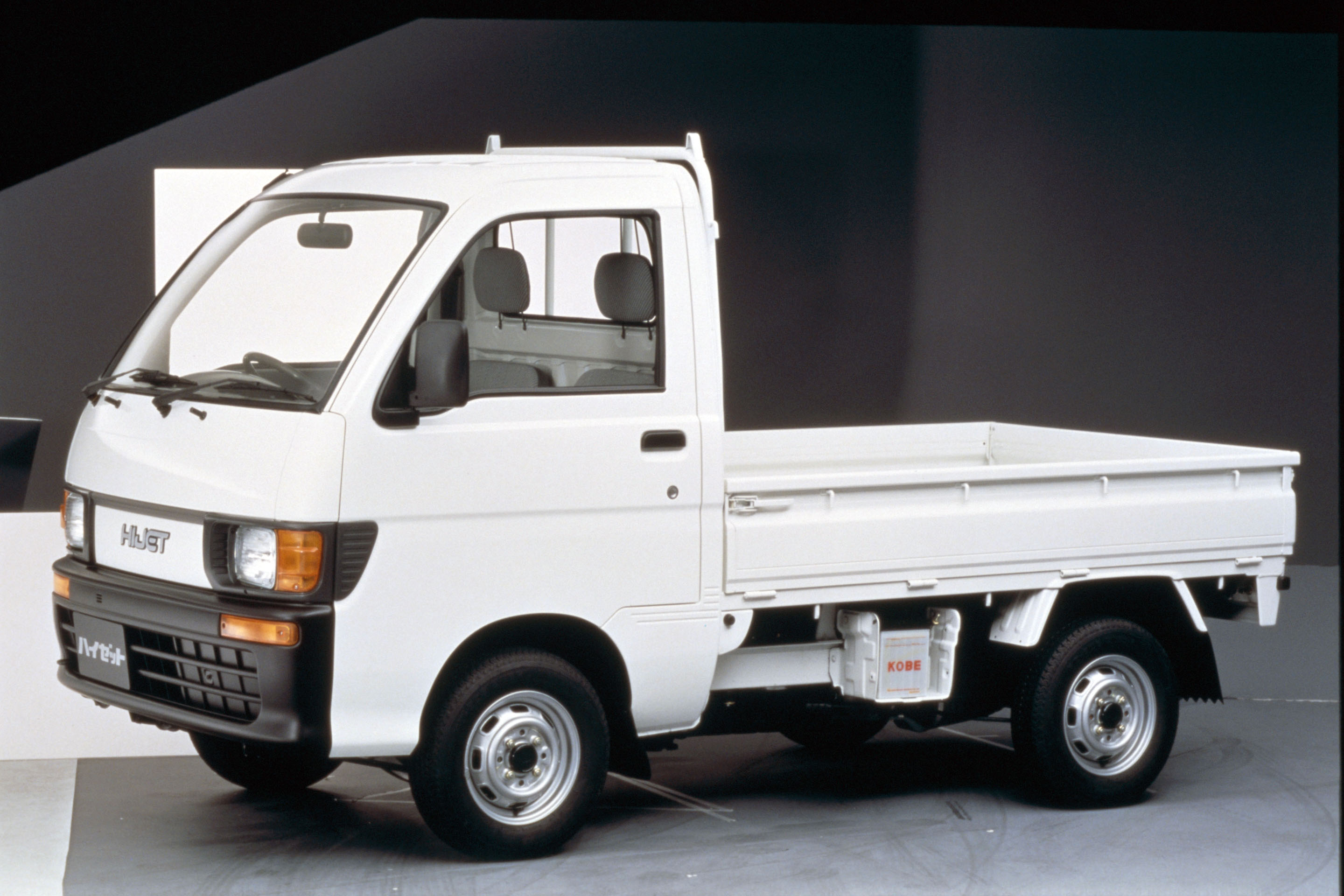
The Charm of the 8th Generation Hijet Truck
Design prioritizing load capacity and durability
The eighth generation is a practical and straight-forward vehicle, boasting optimal size adhering to the older kei car regulations (overall length 3,295mm x overall width 1,395mm), a three-way opening, low-bed cargo area, and sturdy leaf rear suspension. Its engine primarily features a 0.66L inline 3-cylinder engine (EF series, NA), tuned for emphasis on low and mid-speed torque. There are options for a 5-speed MT (or 4MT depending on region), a 3-speed AT, 2WD (FR) or part-time 4WD, with additional options like auxiliary reduction gears or differential locks for agricultural grades. This vehicle's light body, low cargo area, and wide field of vision allow it to excel in daily loading and unloading tasks and short-distance stop-and-go operations. Its high maintainability and abundance of parts make it easy to maintain it even overseas, a great advantage.
Drawbacks of the 8th Generation Hijet Truck
High-speed stability and safety features are "up to the times".
Due to its cab-over design and short wheelbase, the vehicle's straight-line stability on highways and sound insulation may be inferior compared to current models. Safety features such as ABS and airbags are limited, and it's a fact that it tends to cause fatigue when used mainly for long-distance cruising. The cabin, due to its old-style size, is tight and those with tall stature might find a lack of adjustment range in the driving position. Its collision safety is also inferior to the next-generation models. The expected fuel economy ranges around 14-17 km/L under the 10-15 mode (varies by spec) which is not as efficient as the current generation. It is wise to clearly define the use upon purchase and emphasise on checking the suspension, brakes, tires, and rustproofing condition.
Rivals of the 8th generation Hi-Zet truck
Suzuki Carry / Honda Acty / Subaru Sambar
The mini truck market at that time was crowded with strong competitors. The Carry was attractive for its volume of distribution and low cost of parts, the Acty had an edge in traction during loading due to its MR layout, and the Sambar was known for its tenacity in off-road starts due to its RR layout. The 8th generation Hijet occupies an easily approachable position even for those choosing their first mini truck, with its overall balance, quantity, and steadfast durability. If you are primarily off-road, then the combination of 4WD + sub-transmission is recommended, while the nimbleness of 2WD + 5MT (or 3AT) is pleasing if you drive mostly in the city. The easy accessibility of parts supports the maintenance cost.
Specifications of the 8th Generation Hijet Truck
Size: Total length 3,295mm × Total width 1,395mm × Total height approximately 1,700–1,800mm Wheelbase: Approximately 1,900mm Vehicle weight: Approximately 650–730kg (varies by specifications) Engine: 0.66L Inline 3-cylinder (EF series/NA) Transmission: 4MT/5MT/3AT Drive system: FR (2WD), Part-time 4WD (with sub-transmission & diff-lock settings) Suspension: Front struts/Rear leaf Fuel efficiency reference (10・15 mode): Approximately 14–17km/L (varies by specifications and model year)
9th Generation Hijet Truck (S200P/S210P/S201P/S211P, etc., 1999-2014) - Enlarged with new standards, refined with continuous improvements, enhancing the "tool-like" feel.
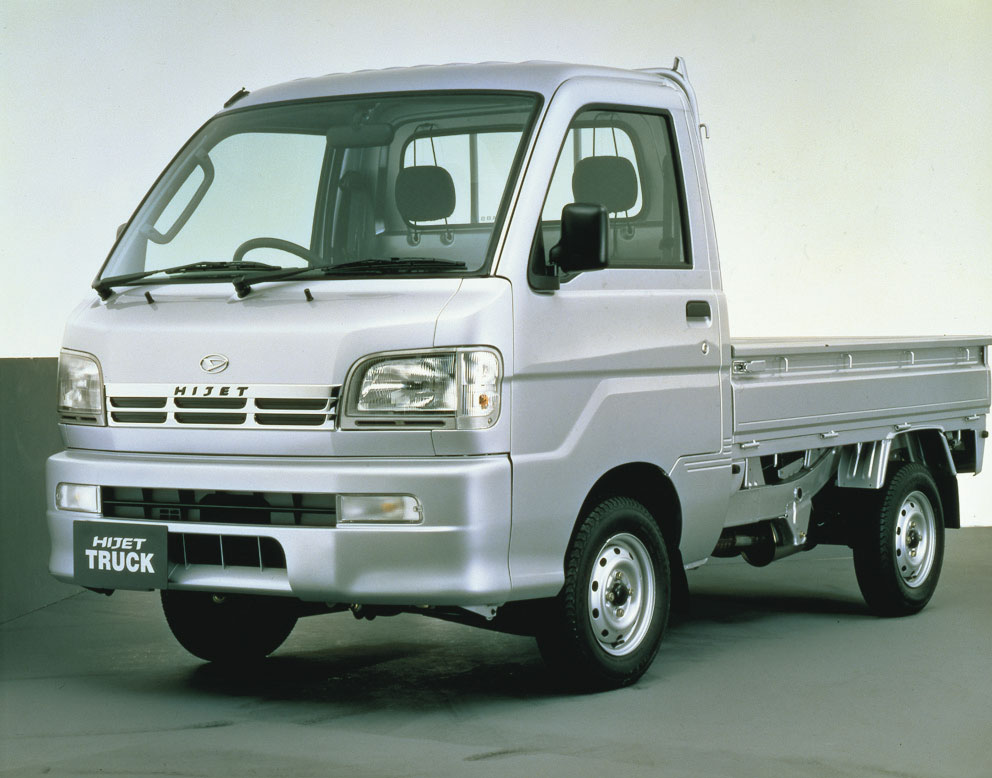
The Appeal of the 9th Generation Hijet Truck
New standard body and accumulated improvements (Enhanced quietness and durability due to KF series engine implementation)
The 1999 full model change was made in response to the new Kei car standards (total length of 3,395mm x total width of 1,475mm), enhancing the practicality of the interior and cargo bed. Initially, the model focused on a 0.66L straight-three engine (EF series, NA), later switching to the quieter, more fuel-efficient, and durable chain-driven KF series. The transmission includes a 5-speed manual and an automatic, with the drive modes being FR and part-time 4WD. Frequent optimizations have been made to the minimal turning radius, rust prevention, and cargo bed features (such as the height and position of hooks), improving usability over its long model life. There are additional options such as sub-transmission and differential lock for agricultural uses, high roofs, and "Jumbo" (extended rear seat cabins), making it easy to tailor the vehicle to specific tasks.
Drawbacks of the 9th Generation Hijet Truck
The evolution of equipment is gradual - year and grade confirmation is a must.
The model life is long, so details such as the engine (EF→KF), automatic transmission (3AT→4AT), safety equipment (airbags, ABS), rust-proofing specifications, bed dimensions and equipment differ depending on the year and grade of the model. When buying used, always determine the "Year, model type, and equipment", and verify if it suits your needs. Even though high-speed stability and quietness have been improved, expecting the comfort of a passenger car is a mismatch due to the cab-over design. If you often travel long distances, it is realistic to aim for a "comfort equipment-focused model" with a larger cabin like a high roof or "jumbo", reduced rotation number of the 4AT, and added insulation materials.
Rivals of the 9th Generation Hijet Truck
Suzuki Carry / Mitsubishi Minicab / Honda Acty (Later model)
During the same period, the Hiace and the Carry both demonstrated their strength in product power and distribution volume. Both are orthodox in design and if practicality is a priority, one of these two should be your choice. At this time, the Minicab was still a unique design by Mitsubishi with plenty of 4WD options and bed options, and the Acty had the charm of road adherence unique to MR. The 9th generation Hiace established a comprehensive strength of being "quiet, durable, and easy to use" through continuous annual improvements and the transition to the KF series. It's available in large quantities and across a wide price range, so the biggest merit for overseas buyers is the ease of finding a model that fits their purpose and budget.
Specifications of the 9th Generation HiAce Truck
Size: Overall length 3,395mm x Overall width 1,475mm x Overall height approximately 1,750–1,900mm (Varies with high roof, etc.) Wheelbase: Approximately 1,900–1,905mm Vehicle Weight: Approximately 670–820kg (Varies with specifications) Engine: 0.66L Inline 3-cylinder (Initially: EF series/NA, later transitioned to KF series) Transmission: 5MT, AT (Initially 3AT → Later years 4AT) Drive Method: FR (2WD), Part-Time 4WD (With sub-transmission and differential lock) Grade Examples: Standard/High Roof/"Jumbo" (Extended Cabin), Agricultural special series Reference Fuel Economy (10-15 mode / varies with year and specifications): Approximately 15–20km/L